
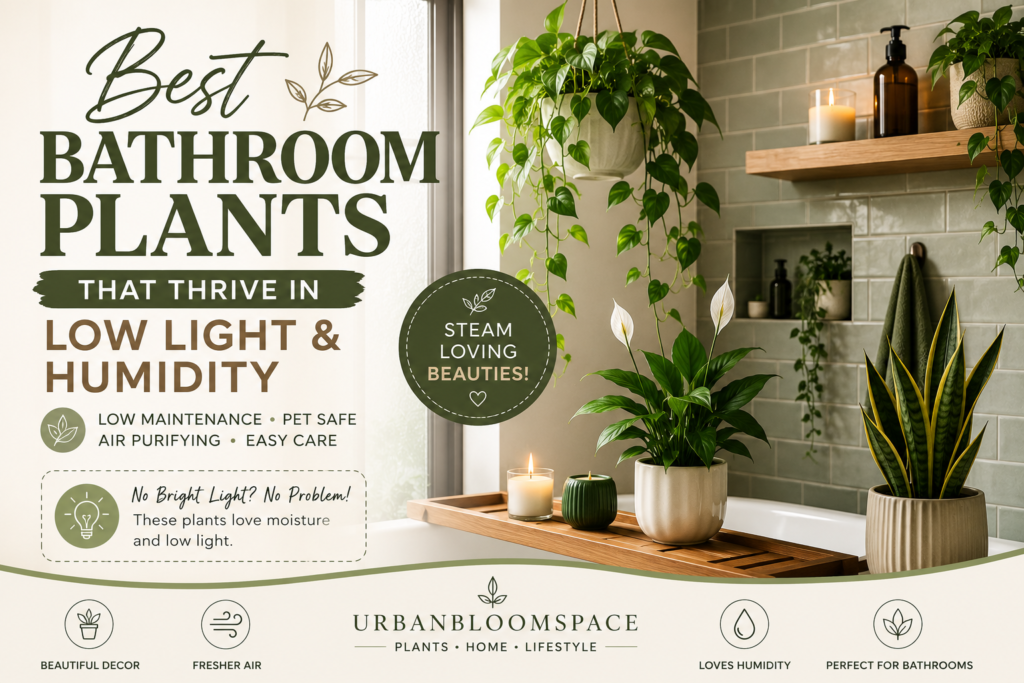
Your bathroom is the most underestimated room in your home.
Think about it. It’s the first place you go in the morning and the last place you visit at night. You spend real time there — getting ready, winding down, doing your skincare routine, sometimes hiding from the world with a bath bomb and a podcast. It’s the room that should feel like a sanctuary.
And yet most bathrooms look like… bathrooms. Functional. Utilitarian. Completely devoid of the lush, living, organic quality that makes a space feel genuinely restorative rather than just adequate.
Here’s what changes that: plants.
The right bathroom plants don’t just look beautiful — they actually belong there. Your bathroom’s natural humidity is exactly what most tropical plants crave. The warm, steamy air from your morning shower creates the microclimate that expensive humidifiers try to simulate in other rooms. What feels like a challenging environment for plants in other parts of your home is actually ideal for certain species that evolved in tropical rainforests.
The key word is certain species. Not every plant thrives in a bathroom, and not every bathroom can support every plant on this list. But choose the right plants for your specific space — and place them thoughtfully — and you’ll transform your bathroom from purely functional into something that actually makes you feel good every single time you walk in.
This guide covers the best bathroom plants for every light situation, exactly how to style them for maximum impact, and the common mistakes that turn bathroom plant dreams into brown-leaf disappointments.
📌 Save this to your bathroom inspo board on Pinterest — you’ll want this guide when you’re ready to refresh your space.
Why Bathrooms Are Actually Great for Plants (When You Choose Right)
Before the plant list, let’s address the concern most people have: won’t the bathroom be bad for plants? Low light, humidity fluctuations, limited space?
Actually, bathrooms offer conditions that many tropical plants find ideal — if you match the plant to your specific bathroom’s conditions.
The humidity advantage: Most tropical houseplants evolved in environments with 60–80% relative humidity. Most US homes run at 30–50% — too dry for optimal tropical plant health. Your bathroom, particularly during and after showers, regularly reaches 70–90% humidity. For humidity-loving plants, this is genuinely ideal and eliminates the need for pebble trays and humidifiers that those same plants would require in other rooms.
The temperature consistency: Bathrooms tend to stay warmer and more temperature-stable than other rooms, particularly in apartments. Most tropical plants prefer temperatures between 65°F and 85°F — a range that bathrooms hit reliably year-round.
The self-cleaning air: Plants in your bathroom aren’t just decorative. Several of the plants on this list actively filter common bathroom air pollutants — formaldehyde (from personal care products and adhesives), benzene, and xylene — while releasing oxygen. That’s meaningful in a small, often-enclosed space.
The honest challenge — light: This is where bathrooms genuinely vary. A bathroom with a large window receives adequate light for most plants. A fully interior bathroom with no windows at all is a different situation entirely — and requires either grow lights or extremely shade-tolerant plants. Be honest about which category your bathroom falls into before choosing plants.
💡 Quick tip: Hold your hand 12 inches above a white sheet of paper at your intended plant placement spot during daylight hours. A clear, defined shadow means adequate light for most low-light plants. A very faint, barely-visible shadow means you need either a grow light or to restrict yourself to the most extreme shade-tolerant options (ZZ plant, cast iron plant). No shadow at all means a grow light is non-negotiable.
The Best Bathroom Plants: Organized by Light Need
For Bathrooms with a Window (Indirect Natural Light)
These plants thrive in the indirect natural light that comes through a bathroom window — even a frosted or north-facing one.
1. Pothos (Epipremnum aureum)
Light need: Low to bright indirect · Humidity love: High ❤️ · Difficulty: Beginner
If there is one plant built for bathroom life, it’s pothos. It tolerates the widest range of light conditions of any trailing plant, it actively loves humidity, and it trails beautifully from shelves, window ledges, or hanging planters in ways that transform a bare bathroom corner into something genuinely lush.
The steam from your shower is essentially free care for a pothos. In a humid bathroom environment, pothos grows faster, trails longer, and needs water less frequently than in a drier room — meaning you can practically forget about it and it’ll reward your neglect with enthusiastic new growth.
Best bathroom placement: On top of a cabinet or floating shelf where the vines can trail downward, or on a window ledge where it can grow toward the light while the steam below keeps it happy.
Variety recommendation for bathrooms: Golden pothos for maximum light tolerance; marble queen for a more elevated, editorial look if your bathroom has decent indirect light; neon pothos for a bright, energetic pop of color in a small or dark bathroom.
One consideration: Pothos is toxic to cats and dogs. If your pet has bathroom access, place it out of reach on a high shelf or consider a pet-safe alternative.
Styling tip: A single pothos in a hanging macramé planter above the bathtub is one of the most satisfying, spa-like bathroom aesthetic upgrades you can make for under $30 total.
2. Snake Plant (Sansevieria / Dracaena trifasciata)
Light need: Very low to moderate indirect · Humidity love: Tolerates it well · Difficulty: Beginner
The snake plant is the bathroom plant for people who are convinced they can’t keep anything alive. It tolerates low light, irregular watering, and humidity levels that would stress most other plants — and it does all of this while looking clean, architectural, and exactly right in a modern or minimalist bathroom.
Tall snake plants on the floor beside a toilet or in a corner create a vertical element that makes a small bathroom feel taller. Compact bird’s nest varieties sit perfectly on a tank top or narrow ledge without taking up precious counter space.
Best bathroom placement: Floor in a corner (tall varieties like laurentii or black coral), on the toilet tank lid (bird’s nest varieties), or on a floating shelf at eye level.
Bathroom-specific benefit: Snake plants are one of the few plants that release oxygen at night rather than during the day — making them particularly well-suited for the bathroom you use for your evening routine.
Variety recommendation: Sansevieria laurentii (classic yellow-edged) for maximum tolerance and height; moonshine (silvery white) for a Japandi or minimalist bathroom aesthetic; bird’s nest hahnii for tight spaces.
💡 Quick tip: Snake plants in bathrooms need water even less frequently than in other rooms because the ambient humidity reduces moisture loss through the leaves. If you’re watering your bathroom snake plant on the same schedule as plants in drier rooms, you’re likely overwatering it. Check soil before every watering — it should be completely dry 3 inches down.
3. Peace Lily (Spathiphyllum)
Light need: Low to moderate indirect · Humidity love: Very high ❤️❤️ · Difficulty: Beginner to intermediate
The peace lily is one of the most visually dramatic bathroom plants available — and one of the few on this list that blooms reliably even in low-light conditions. The large, deep green glossy leaves and elegant white flower spathes create a look that feels genuinely luxurious in a bathroom setting.
Peace lilies are also one of the most dramatic communicators in the plant world. When they need water, they droop visibly and completely — then stand back up within hours of watering. This makes them nearly impossible to accidentally kill through underwatering, because they tell you exactly when they need attention.
Best bathroom placement: On the floor beside the bathtub, on a vanity corner, or on a wide windowsill where the blooms can be seen from the doorway. The white flowers against the humidity-steam backdrop is a genuinely beautiful effect.
Bathroom-specific note: Peace lilies are among the most effective air-purifying plants for enclosed spaces. In a frequently used bathroom, the air quality benefit is real and meaningful.
Important consideration: Peace lily is toxic to cats and dogs. Keep it out of reach if pets have bathroom access.
⚠️ Common mistake: Placing a peace lily too close to a drafty window or vent in a bathroom that gets cold in winter. Peace lilies are sensitive to cold temperatures — below 60°F causes browning of leaves and flower damage. Keep it away from any cold air sources.
4. Boston Fern (Nephrolepis exaltata)
Light need: Low to moderate indirect · Humidity love: Very high ❤️❤️❤️ · Difficulty: Intermediate
Boston ferns are the quintessential lush, romantic bathroom plant — and there’s a reason they keep showing up in every bathroom aesthetic you’ve ever saved on Pinterest. Those long, arching fronds cascading from a hanging basket create a look that is genuinely unlike anything else in the houseplant world.
The honest caveat: Boston ferns are more demanding than most plants on this list. They need consistent moisture, high humidity (which your bathroom provides beautifully), and regular misting of the fronds if the bathroom goes through dry periods. They drop fronds aggressively when stressed — which can feel discouraging. But in a genuinely humid bathroom environment with adequate indirect light, they are among the most rewarding bathroom plants you can grow.
Best bathroom placement: Hanging basket — this is non-negotiable for Boston ferns. The arching fronds only reach their full, dramatic potential when the plant hangs freely and fronds can cascade in all directions. A ceiling-mounted hook above the bathtub or shower area provides both the display position and maximum humidity from steam.
The humidity reward: A Boston fern in a bathroom that gets regular shower steam essentially maintains itself. The humidity that other rooms require you to artificially create is simply… your bathroom’s natural state. This is the plant that truly lives its best life in a bathroom versus anywhere else in your home.
5. Spider Plant (Chlorophytum comosum)
Light need: Low to bright indirect · Humidity love: Moderate to high · Difficulty: Beginner
Spider plants are the most cheerful, forgiving, and fast-rewarding bathroom plants available. They trail gracefully, produce adorable little “spiderette” baby plants on long dangling stems as they mature, and are completely non-toxic to cats and dogs — making them the obvious choice for pet-owning plant parents.
In a humid bathroom environment, spider plants grow vigorously and produce their characteristic spiderettes more prolifically than in drier conditions. Within one growing season, a single spider plant in a bathroom hanging planter can become a cascading, layered display of parent plant and multiple babies that looks genuinely impressive.
Best bathroom placement: Hanging planter near a window, or on a high shelf where spiderettes can dangle freely. The dangling baby plants are half the visual appeal — give them vertical space to perform.
Pet-safe confirmation: Spider plant is verified non-toxic to cats and dogs by the ASPCA. One important note: cats are often attracted to spider plants and may chew on the leaves (the plant has a mild effect on cats similar to catnip). This won’t harm your cat, but may damage the plant. Place at a height where persistent cats can’t reach.
6. Chinese Evergreen (Aglaonema)
Light need: Very low to moderate indirect · Humidity love: Moderate to high · Difficulty: Beginner
Chinese evergreen is the bathroom plant that looks far more exotic than its care requirements suggest. Available in a range of leaf colors — deep green, silvery green, and varieties with pink, red, or burgundy markings — it adapts to lower light conditions better than almost any colorful foliage plant.
The pink and red varieties are particularly well-suited to warm-toned bathroom aesthetics — think terracotta tile, warm wood accents, and earthy tones. The silver and green varieties suit cooler, more minimalist bathroom designs.
Best bathroom placement: Vanity corner, floating shelf, or window ledge. Aglaonema’s compact, bushy growth habit fits well on surfaces without trailing or requiring vertical space.
Low-light performance: Chinese evergreen is genuinely one of the most light-tolerant foliage plants available. In bathrooms with only minimal natural light, it will outperform most other options while still looking beautiful.
For Bathrooms with No Window (Very Low or Artificial Light Only)
These are the plants that can genuinely survive — and even look good — in a windowless bathroom, either under existing artificial lighting or with a small dedicated grow light.
7. ZZ Plant (Zamioculcas zamiifolia)
Light need: Extremely low — fluorescent bathroom lighting is sufficient · Humidity love: Tolerates it well · Difficulty: Beginner (the most forgiving plant on this list)
The ZZ plant exists in a category of its own when it comes to low-light tolerance. It can genuinely survive on nothing more than the artificial lighting in a windowless bathroom — fluorescent overheads, vanity lighting, whatever you have. It stores water in its thick rhizomes underground, meaning it can go weeks or even months between watering without significant stress.
For a completely windowless bathroom, ZZ plant is your most reliable option for adding living greenery without additional grow lighting.
Best bathroom placement: Floor in a corner, on the back of the toilet tank, or on a low shelf. The upright, architectural growth habit works well in tight spaces.
The honest caveat: ZZ plant grows slowly and doesn’t produce the lush, trailing visual drama of some other plants on this list. It’s a beautiful, architectural statement plant — not a cascading jungle. Manage expectations accordingly.
Important note: ZZ plant is toxic to cats, dogs, and humans if ingested. Keep out of reach of pets and small children.
8. Cast Iron Plant (Aspidistra elatior)
Light need: Extremely low · Humidity love: Tolerates it well · Difficulty: Beginner (possibly the most indestructible plant in existence)
The cast iron plant earned its name honestly. It tolerates dim light, temperature fluctuations, irregular watering, and low humidity better than virtually any other houseplant — making it the failsafe option for truly challenging bathroom conditions.
The deep green, strap-like leaves have a classic, slightly formal quality that suits both traditional bathroom decor and modern minimalist aesthetics. It won’t trail dramatically or produce colorful flowers, but it will provide consistent, reliable greenery in conditions that would kill almost anything else.
Best bathroom placement: Floor in a corner, particularly in bathrooms with dark tile or limited natural light where other plants have repeatedly failed.
For Bathroom Shelves and Small Spaces
9. Air Plants (Tillandsia)
Light need: Bright indirect to artificial · Humidity love: Very high ❤️❤️ · Difficulty: Beginner to intermediate
Air plants are one of the most creative and versatile bathroom plant decor options available — and they’re perfect for the bathroom specifically because they’re epiphytes that absorb moisture directly from the air through their leaves rather than through soil. Your steamy bathroom essentially waters them for you.
They require no pot, no soil, and minimal space — which makes them ideal for bathrooms where every square inch of surface is already doing double duty. Mount them on a piece of driftwood, nestle them in a small glass terrarium on the vanity, or hang them in a glass globe from the ceiling.
Best bathroom placement: On the vanity, windowsill, mounted on wall art, or hanging in glass globe planters at different heights for a layered plant aesthetic that takes up no horizontal surface space at all.
Care in a humid bathroom: In a bathroom with regular shower steam, tillandsia may not need additional watering at all beyond what the ambient humidity provides. If your bathroom has periods of dryness, give them a 20-minute soak in water once per week, shake off excess water completely, and allow them to dry in a spot with good air circulation before returning to an enclosed display.
⚠️ Common mistake: Keeping tillandsia in a glass globe in a bathroom with poor air circulation. Air plants need airflow as much as they need humidity — a fully enclosed glass container in a windowless bathroom can cause rot. Use open globes or mounts that allow air movement, and ensure your bathroom has some ventilation.
10. Aloe Vera (Aloe barbadensis miller)
Light need: Bright indirect — needs a window · Humidity love: Low to moderate (tolerates bathroom humidity) · Difficulty: Beginner
Aloe vera makes this list not because it loves bathroom conditions — it prefers drier air than most bathrooms provide — but because it earns its place through pure practicality. A bathroom aloe is useful in a way no other plant on this list is: fresh aloe gel for minor burns, skin irritation, and post-razor soothing is available within arm’s reach exactly where you need it most.
Best bathroom placement: Window ledge — aloe needs more light than most bathroom plants, so it requires a window with decent light. A south or east-facing bathroom window is ideal.
The practical bonus: Snap a leaf close to the base when you have a minor burn or skin irritation. The gel inside is one of nature’s most effective soothing agents. Having it in your bathroom — where burns, razor nicks, and skin irritation most often occur — is genuinely useful rather than purely decorative.
Bathroom Plant Styling: Creating the Aesthetic You’ve Been Saving on Pinterest
Choosing the right plants is only half the equation. How you arrange and style them determines whether your bathroom looks like a spa or like a plant is awkwardly sitting on your toilet tank.
The 3-Level Principle
The most visually satisfying bathroom plant setups use three distinct height levels simultaneously:
High level (ceiling to 5 feet): Hanging baskets, macramé planters, mounted air plant displays. This is where Boston ferns, trailing pothos, and spider plants do their best visual work.
Mid level (counter to 5 feet): Floating shelves, windowsills, toilet tank top. Snake plants, peace lilies, and aglaonema at this level create the middle layer of your plant aesthetic.
Low level (floor): Large statement plants — a tall snake plant, a substantial ZZ plant, or a floor-positioned peace lily. The floor level adds scale and grounds the entire arrangement.
Using all three levels simultaneously creates the layered, lush look that Pinterest bathroom aesthetic images are built around. Using only one level — say, three plants on the same shelf — looks flat and unstudied by comparison.
Pot and Planter Styling by Bathroom Aesthetic
Minimalist / Japandi bathroom: White ceramic pots, matte black planters, or simple terracotta. One or two plants maximum. Snake plant, ZZ plant, or a single pothos in a clean hanging planter.
Boho / cottagecore bathroom: Macramé hangers, woven seagrass baskets, hanging terracotta pots. Boston fern, spider plant, and trailing pothos together create the layered boho effect. Mix pot sizes and textures intentionally.
Spa / wellness bathroom: All-white or neutral pots, a single large peace lily, several air plants mounted on a piece of driftwood or floating wall art. Simple, clean, intentional.
Maximalist bathroom: Layer multiple plants at all three levels. Mix foliage textures — large glossy leaves (peace lily), fine trailing fronds (Boston fern), architectural uprights (snake plant) — for a plant-filled space that feels curated rather than chaotic. Group pots in odd numbers: three or five always reads better than two or four.
The Shelf Arrangement Formula
For bathroom floating shelves specifically, this formula produces the most consistently satisfying results:
- Anchor with height first — place your tallest plant or element at one end of the shelf
- Trail from the opposite end — a pothos or spider plant that drapes over the shelf edge creates movement and draws the eye
- Fill the middle with supporting objects — candles, a small dish, a stone, a glass bottle. Plants surrounded only by other plants look crowded; plants alongside carefully chosen objects look intentional
- Leave white space — a shelf that’s 70% full looks more styled than a shelf that’s 100% full. Restraint is the difference between “curated” and “cluttered”
What You’ll Actually Need for Bathroom Plant Success
1. Hanging Planters and Macramé Hangers The most transformative bathroom plant decor upgrade with the lowest effort. One hanging planter above the bathtub changes the entire bathroom aesthetic. Look for planters with drainage holes or use nursery pots inside decorative hangers. $12–$30 for a set · Buy Now
2. Floating Shelves (Waterproof or Water-Resistant) Standard wooden shelves can warp in bathroom humidity over time. Look for shelves specifically rated for bathroom use — moisture-resistant wood, melamine, or metal. IKEA LACK and MOSSLANDA both hold up well in bathroom conditions. $8–$25 each · Buy Now
3. Small Ceramic or Terracotta Pots (4–6 inch) For vanity and shelf plants. Terracotta is ideal because its porosity allows soil to dry appropriately even in a humid environment — reducing overwatering risk. $12–$20 for a set of 5 · Buy Now
4. Waterproof Saucers Non-negotiable for any bathroom plant on a wooden vanity, shelf, or tank top. Water damage to bathroom furniture is expensive and preventable. $6–$12 for a pack · Buy Now
5. Small LED Grow Light (for windowless bathrooms) A compact clip-on or strip LED grow light on a 10–12 hour timer opens up far more plant options for windowless bathrooms and dramatically improves growth in any low-light bathroom situation. $20–$45 · Buy Now
6. Moisture Meter In a humid bathroom environment, soil dries more slowly than in other rooms — making it easy to accidentally overwater. A moisture meter removes all guesswork. $10–$15 · Buy Now
Budget starting point: One hanging pothos in a macramé planter ($6 plant + $15 planter) and one snake plant on the toilet tank ($10–$15) is a complete, satisfying bathroom plant decor upgrade for under $40 total.
The Mistakes That Turn Bathroom Plant Goals Into Dead Plants
1. Choosing plants based on aesthetics alone without checking your light The most beautiful Boston fern hanging in a completely windowless bathroom will be brown within a month. Assess your light honestly before choosing plants. Stunning bathroom plant content on Instagram is almost always shot in bathrooms with large windows and generous natural light. Real apartments vary widely.
2. Overwatering because the bathroom “feels dry sometimes” Bathroom humidity fluctuates — very high during a shower, potentially lower between uses. But the soil inside a pot retains moisture regardless of ambient humidity. Always check soil moisture before watering, not the bathroom air. Overwatering is the most common cause of bathroom plant death.
3. Placing plants directly on wooden surfaces without saucers One week of forgotten saucer drainage is enough to permanently water-stain a wooden vanity or warp a wooden shelf. Every bathroom plant needs a waterproof saucer. Every single one.
4. Ignoring ventilation High humidity is great. Stagnant, high-humidity air with no circulation is a fungal disease invitation. Ensure your bathroom has some air movement — a ventilation fan running for 15–20 minutes after showers is ideal not just for the room but for the plants. Air circulation prevents the fungal issues that high humidity can otherwise encourage.
5. Buying too many plants for the available light It’s tempting to create a full jungle immediately. But six plants competing for the light from one small window produces six struggling plants rather than six thriving ones. Start with two or three plants that are well-matched to your light availability, let them establish and thrive, then add more once you understand your bathroom’s specific conditions.
Your Bathroom Plant Questions Answered
Q: What is the best plant for a bathroom with no window?
A: ZZ plant is the most reliable choice for a truly windowless bathroom. It genuinely tolerates fluorescent and LED overhead lighting as its primary light source and can go weeks between watering. Cast iron plant is the only other strong contender. For more plant variety in a windowless bathroom, a small $20–$30 LED grow light on a timer dramatically expands your options — pothos, snake plant, and peace lily all thrive under supplemental lighting.
Q: Will bathroom humidity damage my plants or cause overwatering?
A: Ambient humidity does not cause overwatering — only watering the soil too frequently causes overwatering. High bathroom humidity actually benefits most tropical plants by reducing moisture loss through the leaves, which means they may need watering slightly less frequently than in drier rooms. The benefit is real; the overwatering risk comes from the pot and soil, not the air.
Q: How do I keep bathroom plants from getting moldy?
A: Mold on soil surface and leaves is a ventilation issue, not a humidity issue per se. Ensure your bathroom runs a ventilation fan during and after showers. Avoid overwatering — moist soil sitting in stagnant air is the primary cause of soil surface mold. If mold appears on soil, sprinkle a thin layer of horticultural sand over the surface to improve aeration. Remove any affected leaves promptly to prevent spread.
Q: Can I put a plant in the shower?
A: Temporarily — yes, and it’s actually a great way to water plants and give them a humidity boost. Permanently — no. Direct shower spray on foliage causes fungal issues, and the inconsistent conditions (dry between uses, waterlogged during use) don’t suit any plant long-term. Placing plants near the shower rather than inside it gives them shower steam benefits without the downsides.
Q: What bathroom plants are safe for cats and dogs?
A: Spider plant, Boston fern, air plants (tillandsia), and aloe vera are all verified non-toxic to cats and dogs by the ASPCA. Pothos, peace lily, ZZ plant, and Chinese evergreen are toxic to pets — keep these on high shelves out of reach or skip them if your pets have unrestricted bathroom access. If you’re unsure about any plant, check the ASPCA Animal Poison Control database at aspca.org before purchasing.
Your Bathroom Deserves to Be Beautiful
Here’s the truth about bathroom plant decor that nobody says directly: the effort is almost embarrassingly low for the return.
One hanging pothos above the bathtub. One snake plant in the corner. A cluster of air plants on a piece of driftwood on the vanity. Done. Your bathroom now looks like the kind of bathroom that gets photographed, saved on Pinterest, and described as a sanctuary.
Plants do something to a space that no candle, no tile refresh, and no new towel set can replicate. They make it feel alive. They make it feel intentional. They make a room that you pass through feel like a room you want to be in.
And in the bathroom — where the humidity is already doing half the work for you — all you have to do is choose the right plant and put it somewhere beautiful.
That’s it. Start with one. See what it does to the room. You’ll understand immediately why bathroom plant decor is one of the most searched home aesthetics in the world.
📌 Saving this for your next bathroom refresh? Pin it to your bathroom inspo board and come back when you’re ready to shop.
Also read:
- 10 Trailing Pothos Shelf Ideas for Small Apartments — Boho, Minimalist and Maximalist
- Snake Plant Care: The Complete Guide for People Who Keep Killing Houseplants
- Pet-Safe Trailing Houseplants: 6 Gorgeous Options Safe for Cats and Dogs
- Is Pothos Toxic to Cats and Dogs? The Honest Answer
- Best Plants for Rooms with No Sunlight: The Low-Light Survival List
Want a free Bathroom Plant Cheat Sheet? A printable one-page guide matching the top 10 bathroom plants to your bathroom’s exact light level, with care notes and styling suggestions. Download Here