
Indoor plants can completely transform a home. They add life, improve mood, soften apartment spaces, and create a calm atmosphere that many people in the US and Canada love. But if you are new to plant care, keeping houseplants alive can feel frustrating.
You water them. You place them near a window. You even talk to them sometimes. Yet the leaves still turn yellow, brown, droopy, or crispy.
The truth is this: most beginners are not “bad” at plant care. They are simply making a few very common mistakes.
This guide will help you understand:
- Why indoor plants struggle
- The biggest beginner plant care mistakes
- Easy solutions anyone can follow
- How to create healthier indoor growing conditions
Whether you live in a small apartment in New York, a condo in Toronto, or a cozy suburban home, these beginner-friendly plant care tips will help your houseplants thrive.
Mistake #1: Overwatering Your Houseplants
Overwatering is the number one reason indoor plants die.
Many beginners believe watering more means caring more. Unfortunately, too much water suffocates plant roots and creates root rot — a serious problem that can quickly kill indoor plants.
In colder regions of the US and Canada, this problem becomes even worse during winter because indoor plants grow more slowly and need less water.
Signs of Overwatering
- Yellow leaves
- Mushy stems
- Drooping despite wet soil
- Moldy soil surface
- Fungus gnats flying around pots
- Bad smell from soil
Why This Happens
Plant roots need oxygen. When soil stays constantly wet, air pockets disappear and roots begin to rot.
Most indoor plants prefer slightly dry soil between watering sessions.
The Solution
1. Check Soil Before Watering
Never water on a fixed schedule.
Stick your finger 1–2 inches into the soil. If it still feels damp, wait another day or two.
2. Use Pots With Drainage Holes
Decorative pots without drainage trap water at the bottom.
Always choose nursery pots or terracotta pots with proper drainage.
3. Reduce Watering in Winter
Plants grow slower during colder months and need less moisture.
4. Empty Water Trays
Never let water sit underneath your plant for long periods.
Beginner-Friendly Plants That Tolerate Missed Watering
- Snake Plant
- ZZ Plant
- Pothos
- Jade Plant
These plants are more forgiving for beginners.
Overwatering Section
“Split scene showing overwatered indoor plant with yellow leaves beside healthy thriving plant, watering can, modern apartment aesthetic, realistic photography, educational infographic style”
Mistake #2: Giving Your Plants Too Little Light
Many indoor plants struggle because homes are darker than people realize.
In apartments and condos across North America, plants are often placed in decorative corners far from windows. While they may survive temporarily, they slowly weaken over time.
Light is food for plants.
Without enough light, plants cannot produce the energy needed for healthy growth.
Signs of Low Light
- Leggy stretched stems
- Small leaves
- Slow growth
- Pale foliage
- Leaning toward windows
- Leaves dropping frequently
Why This Happens
Most tropical houseplants naturally grow in bright environments.
Even bright indoor rooms may still provide less light than outdoor shade.
The Solution
1. Move Plants Closer to Windows
East-facing or south-facing windows are usually best in US and Canadian homes.
2. Use Bright Indirect Light
Most common houseplants dislike harsh afternoon sun but love filtered natural light.
3. Rotate Plants Weekly
This helps plants grow evenly instead of leaning in one direction.
4. Consider Grow Lights During Winter
Canadian winters and darker northern climates can reduce indoor sunlight dramatically.
Affordable LED grow lights work well for beginners.
Best Low-Light Plants
- Snake Plant
- ZZ Plant
- Cast Iron Plant
- Pothos
These are excellent beginner choices for apartments with limited sunlight.
Mistake #3: Using the Wrong Pot or Soil
Many beginners focus only on the plant itself and ignore the importance of proper pots and soil.
But unhealthy roots usually begin with poor drainage.
Common Potting Mistakes
- Pots without drainage holes
- Oversized pots
- Cheap dense soil
- Compact soil that stays wet too long
Signs Your Pot Is the Problem
- Soil stays wet for many days
- Root rot smell
- Yellowing leaves
- Slow growth
- Fungus gnats
- Roots circling tightly
Why This Happens
Indoor plants need airflow around roots.
Heavy soil traps moisture and prevents oxygen circulation.
The Solution
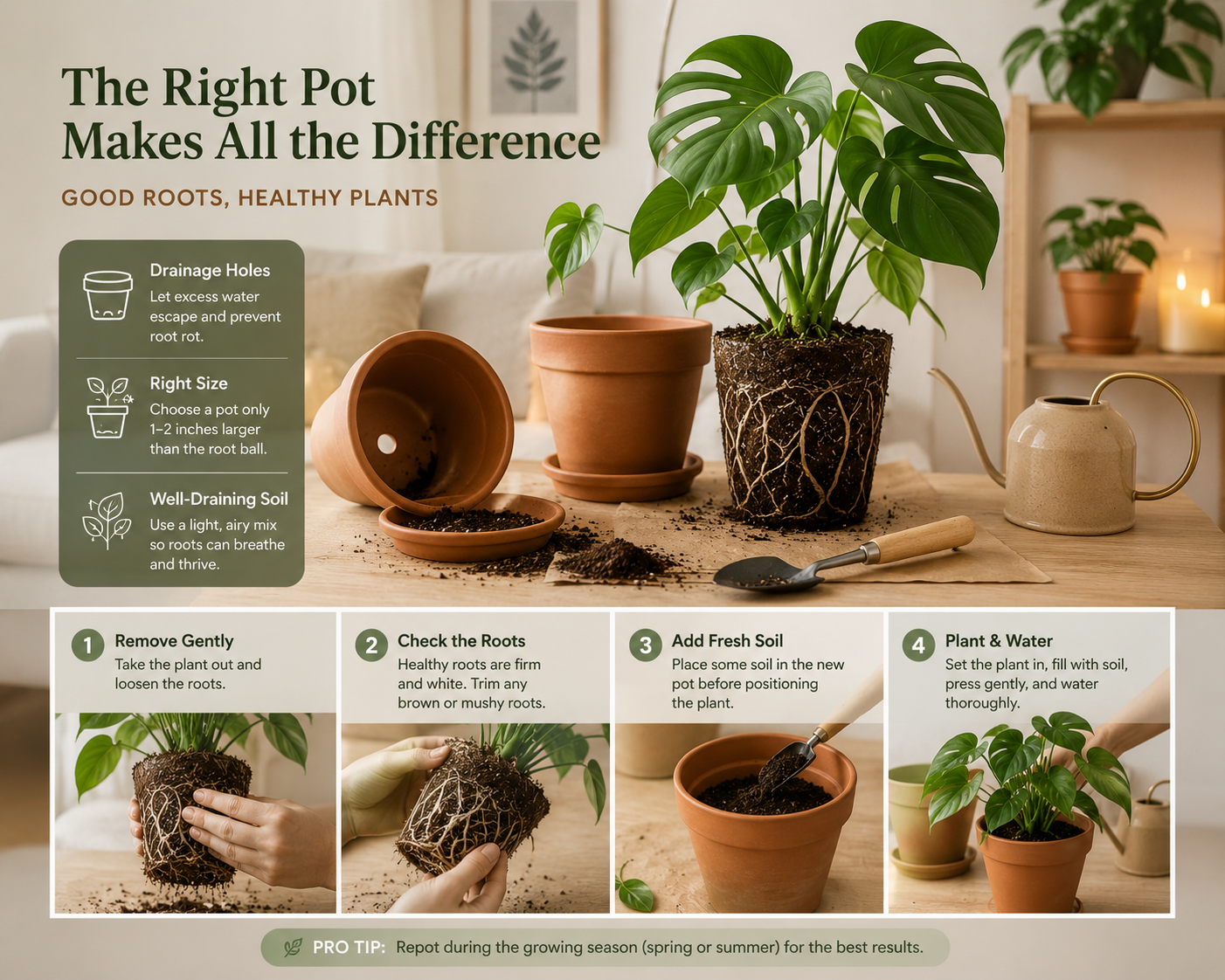
1. Choose Pots With Drainage
This is one of the most important beginner plant care tips.
2. Use Well-Draining Potting Mix
Look for mixes containing:
- Perlite
- Bark
- Coco coir
- Peat moss
3. Avoid Oversized Pots
Large pots hold extra moisture that beginners often struggle to manage.
Choose pots only slightly larger than the root ball.
4. Repot When Necessary
If roots circle tightly around the soil, it may be time to upgrade your pot size.
Best Pots for Beginners
Terracotta pots are excellent because they:
- Dry faster
- Improve airflow
- Help prevent overwatering
Mistake #4: Ignoring Humidity Needs
Many popular houseplants come from tropical environments with high humidity.
Unfortunately, indoor heating systems in the US and Canada create dry air — especially during winter.
This causes stressed plants and damaged leaves.
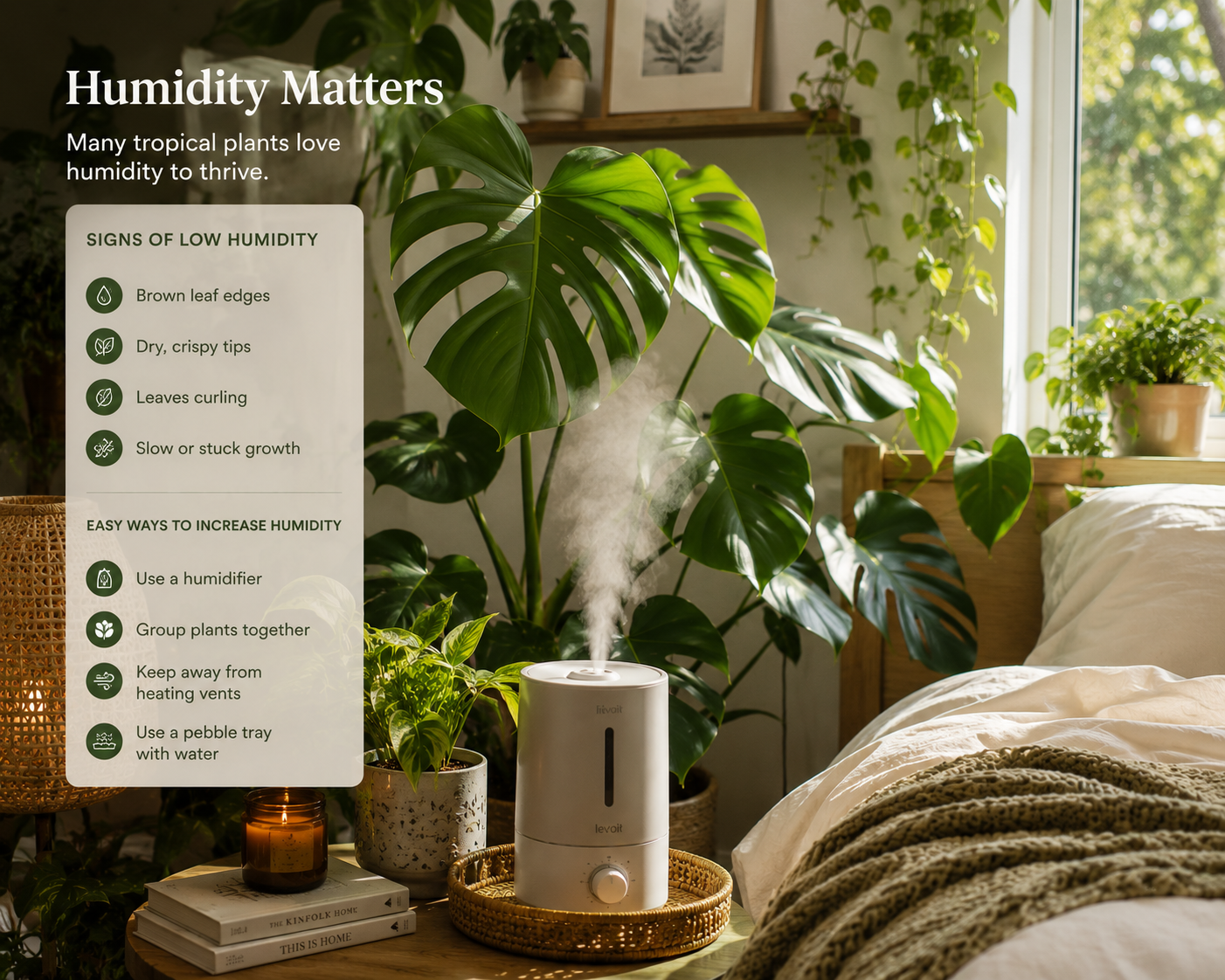
Signs of Low Humidity
- Brown crispy edges
- Curling leaves
- Dry leaf tips
- Slow unfurling leaves
- Cracking foliage
Plants That Need Higher Humidity
- Monstera
- Calathea
- Ferns
- Peace Lily
- Alocasia
Why This Happens
Indoor heating removes moisture from the air.
Plants lose water faster through their leaves and become stressed.
The Solution
1. Use a Humidifier
This is the easiest solution for tropical plants.
2. Group Plants Together
Plants naturally release moisture into the surrounding air.
3. Keep Plants Away From Heating Vents
Hot dry airflow damages foliage quickly.
4. Use Pebble Trays
A tray with water and stones beneath pots can slightly improve humidity.
Beginner Tip
Do not mist plants excessively. Humidifiers work better than occasional spraying.
Mistake #5: Forgetting About Pests
Tiny pests are one of the most overlooked beginner plant problems.
By the time many people notice pests, the infestation has already spread.
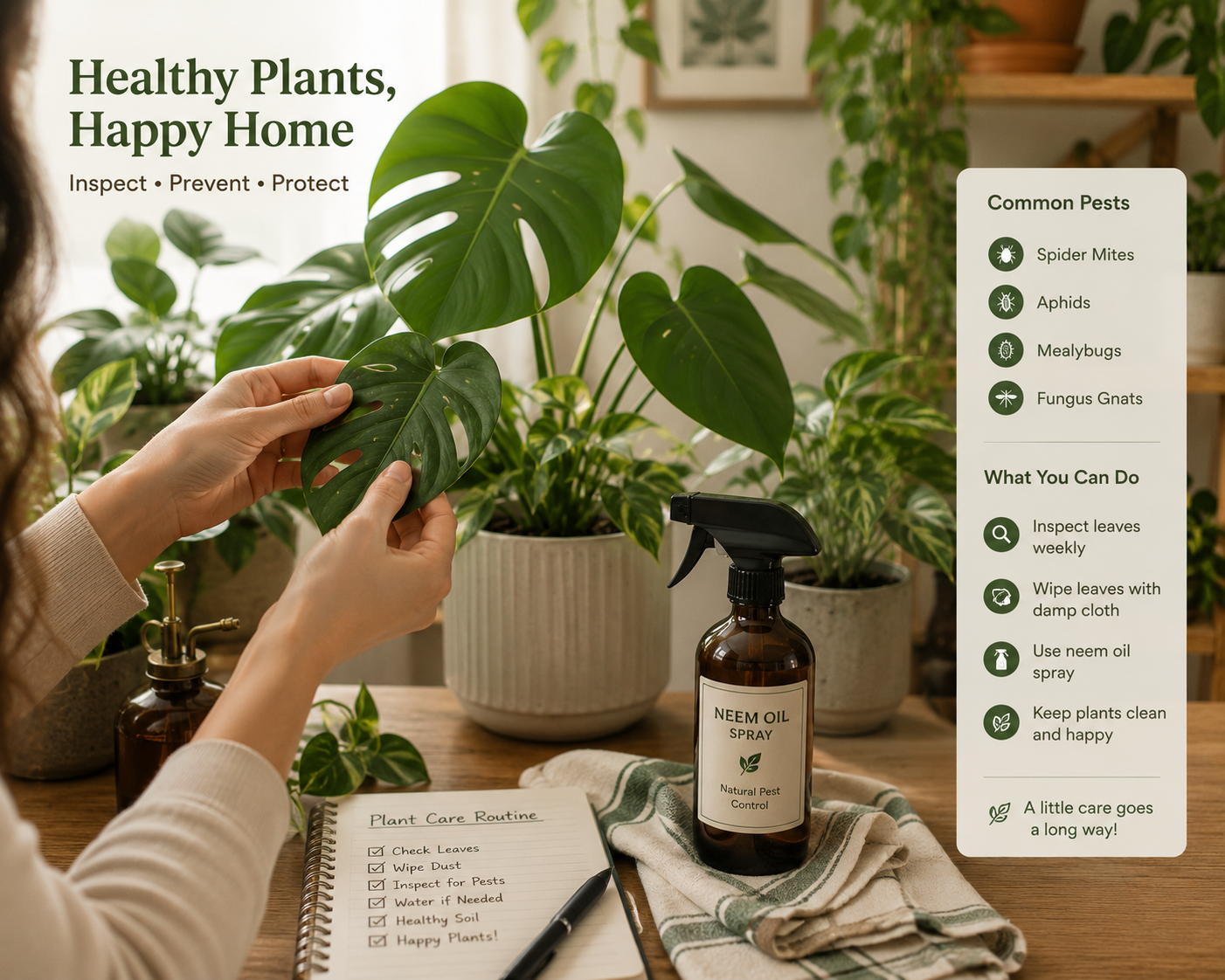
Common Houseplant Pests
- Spider mites
- Fungus gnats
- Aphids
- Mealybugs
- Scale insects
Signs of Pests
- Sticky leaves
- Tiny webbing
- Yellow spots
- Holes in leaves
- White fuzzy insects
- Flying gnats near soil
Why This Happens
Weak plants are more vulnerable to pests.
Overwatering, poor airflow, and low light often create the perfect environment for infestations.
The Solution
1. Inspect Leaves Weekly
Check both sides of leaves regularly.
2. Wipe Leaves
Dusty leaves attract problems and reduce photosynthesis.
3. Isolate Infected Plants
Keep unhealthy plants away from healthy ones immediately.
4. Use Neem Oil Spray
Neem oil is popular in North America for natural pest prevention.
5. Improve Airflow
Plants packed too tightly together can develop pest problems more easily.
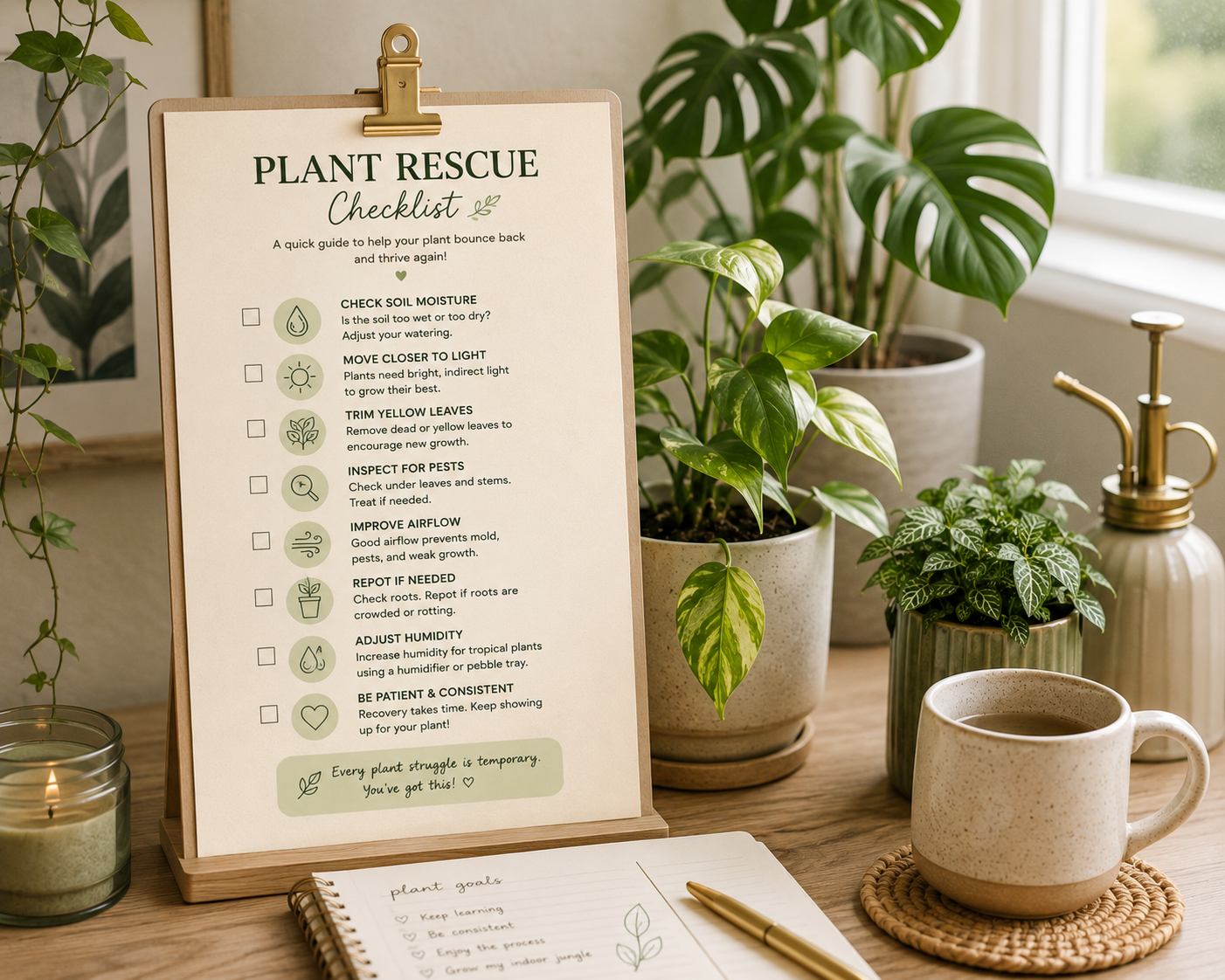
Quick Plant Rescue Checklist for Beginners
If your plant looks unhealthy, do not panic.
Most houseplants can recover when conditions improve.
Plant Rescue Checklist
✔ Check soil moisture
✔ Move closer to light
✔ Trim yellow leaves
✔ Inspect for pests
✔ Improve airflow
✔ Repot if roots are rotting
✔ Reduce watering frequency
✔ Increase humidity if needed
Plant care is about observation and adjustment.
Best Beginner-Friendly Houseplants for US & Canadian Homes
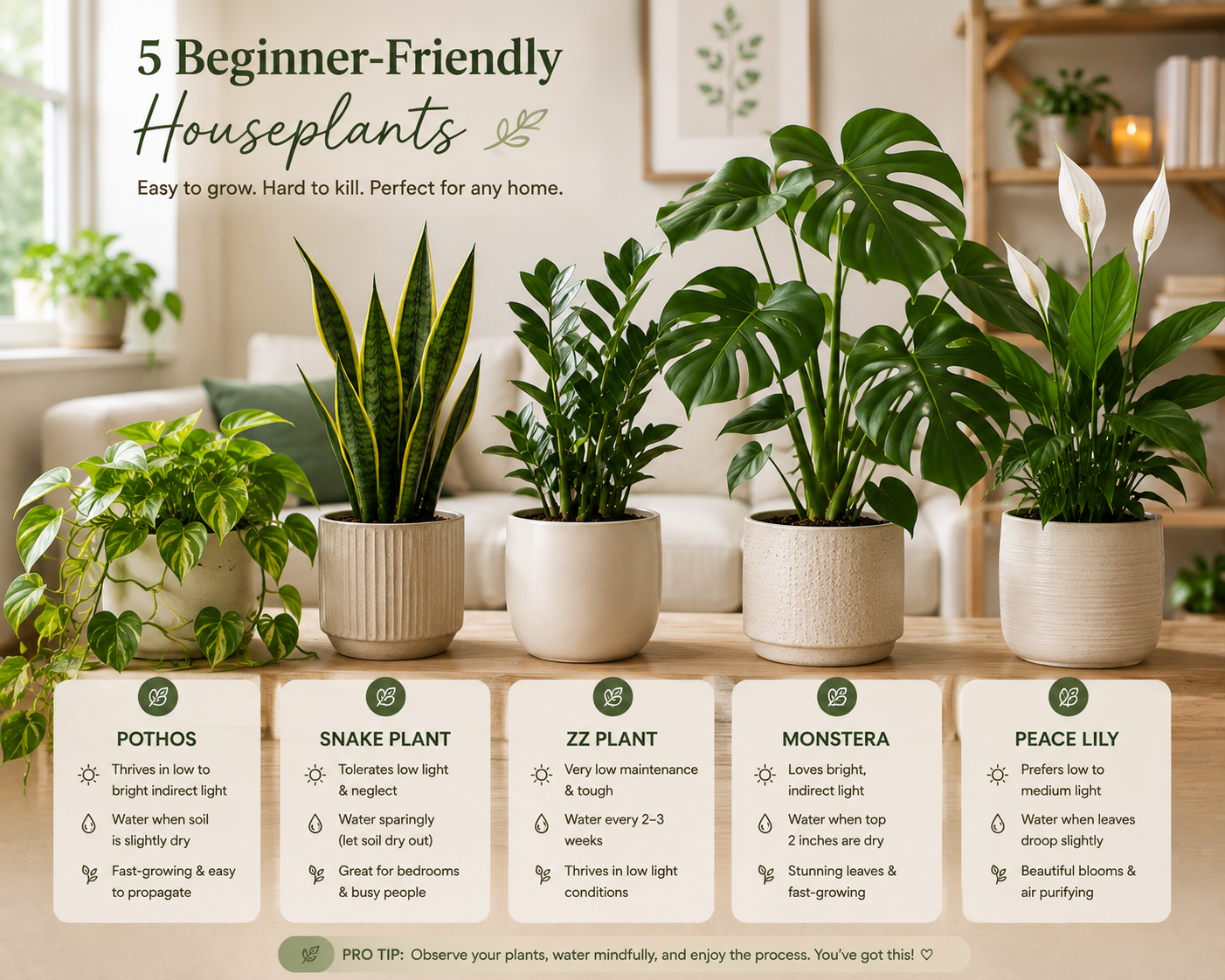
If you are just starting your indoor plant journey, choose forgiving plants first.
These are beginner favorites because they adapt well to apartments and busy lifestyles.
1. Pothos
- Fast-growing
- Tolerates lower light
- Easy propagation
2. Snake Plant
- Extremely low maintenance
- Drought tolerant
- Great for bedrooms
3. ZZ Plant
- Thrives on neglect
- Handles low light well
- Excellent for offices
4. Monstera
- Beautiful tropical leaves
- Popular modern aesthetic
- Fast grower in bright light
5. Peace Lily
- Elegant white flowers
- Indicates thirst dramatically
- Good beginner tropical plant
Final Thoughts: Your Plants Don’t Need Perfection
One of the biggest misconceptions about plant care is that experienced plant parents never make mistakes.
They do.
The difference is they learn to observe their plants and adjust care gradually.
Healthy houseplants are created through consistency, patience, and understanding — not perfection.
If you remember only one thing from this guide, let it be this:
Most struggling plants can recover.
Small changes in watering, lighting, humidity, and airflow can completely transform your indoor jungle.
Start simple. Learn slowly. Enjoy the process.