
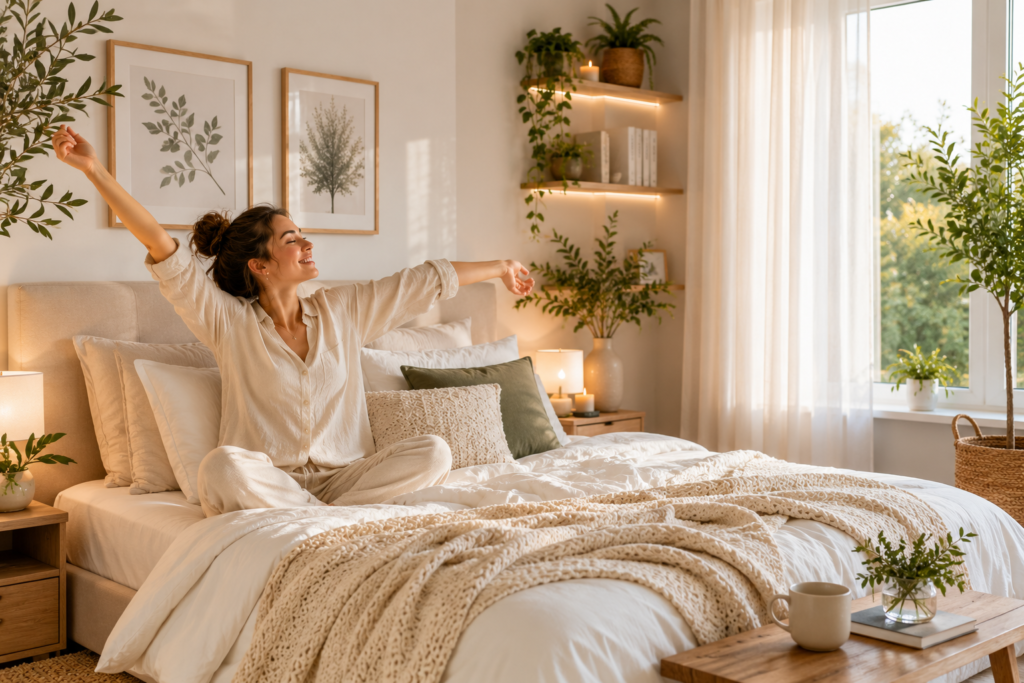
There’s a specific feeling a bedroom can give you.
You walk in after a long day. The lighting is low and warm — not harsh overhead white, but soft amber glow from a lamp in the corner. The bed looks like something you could disappear into: layered in textures, piled with cushions, a chunky knit throw casually draped across one corner. The room smells faintly of fresh linen and something softly botanical.
You exhale before you even sit down.
That feeling has a name — cozy — and it is not accidental. It is not expensive. And it is absolutely not out of reach for a small apartment bedroom, a rental you can’t paint, or a room that currently feels more functional than restorative.
Creating a genuinely cozy bedroom aesthetic is really about one thing: sensory intentionality. The deliberate layering of textures, light, scent, and softness in ways that signal to your nervous system that this space is safe, warm, and yours. Once you understand what actually creates that feeling — rather than just what looks good in a photo — you can build it in any space, at any budget, starting this weekend.
This guide covers everything: the cozy room ideas that genuinely make a difference, the specific aesthetic choices that turn a plain bedroom into a warm sanctuary, the styling principles that work for cozy apartment bedrooms and larger spaces alike, and the most common mistakes that keep bedrooms feeling cold and functional no matter how much effort goes into them.
📌 Save this to your bedroom inspo board on Pinterest — the guide you come back to every time you’re ready to make your room feel more like you.
Why Some Bedrooms Feel Cozy and Others Don’t: The Science Behind the Feeling
Before ideas and products, it helps to understand what cozy actually is — because “cozy” is not an aesthetic. It’s a physiological response.
The feeling of coziness is triggered by specific sensory inputs that the human nervous system associates with safety, warmth, and shelter. Soft textures signal tactile comfort. Warm, low-level lighting mimics firelight and triggers parasympathetic nervous system responses associated with relaxation. Enclosed, layered spaces activate what environmental psychologists call “refuge” responses — the instinctive sense of being sheltered and protected.
The Danish concept of hygge (which sparked a global conversation about cozy living in the mid-2010s and has never really left) formalized something humans have always known instinctively: environments that feel warm, soft, dim, enclosed, and sensory create a measurably different emotional experience than environments that feel bright, hard, open, and clinical.
What this means for your bedroom: Every cozy bedroom idea that follows works because it activates one or more of these sensory triggers — not because it looks good on a mood board, but because it creates a physical response in the person living in the space. Understanding this is what separates truly cozy bedrooms from bedrooms that look cozy in photos but feel flat in person.
The goal is not to decorate for Instagram. The goal is to build an environment that makes you feel the way a favorite sweater feels — enveloped, unhurried, and completely at ease.
The Cozy Bedroom Aesthetic: 7 Core Elements That Create the Look and the Feeling
Element 1: Warm Lighting — The Single Most Transformative Change You Can Make
If you do nothing else from this guide, do this: change your bedroom lighting.
Harsh overhead lighting is the single biggest enemy of a cozy bedroom aesthetic. Cool white light (5000K+) activates alertness, suppresses melatonin, and makes even the most beautifully styled bedroom feel like a doctor’s office after dark. It is functionally incompatible with a cozy room aesthetic, and no amount of soft textiles or cushions will overcome it.
The warm lighting formula: Layer three types of light at low heights, all in warm color temperatures (2200K–2700K — labeled “warm white” or “soft white”):
Ambient glow (the base layer): A table lamp with a warm-toned bulb on each bedside table. This replaces overhead lighting as your primary bedroom light after sundown. The warm, low, directional light creates immediate visual intimacy and signals “rest mode” to your nervous system in a way no overhead fixture can.
Accent light (the mood layer): Fairy lights or LED string lights draped along a headboard, tucked behind a curtain, wound through a bookshelf, or draped along the ceiling perimeter of the room. The soft, scattered points of warm light create depth and dimension in the room that a single lamp cannot. A bedroom with active fairy lights at night looks entirely different — more layered, more romantic, more genuinely cozy — than the same bedroom without them.
Task light (the functional layer): A small, directable lamp for reading — ideally one with a warm bulb and a shade that contains the light rather than spreading it throughout the room. Reading in warm, contained light rather than turning on overhead lighting keeps your room in cozy mode while still being functional.
Bulb temperature: Every bulb in your bedroom should be 2200K–2700K. This is the amber, candlelight range. If your lamps currently have daylight or cool white bulbs, replacing them costs $5–$10 and is the highest-impact, lowest-effort bedroom transformation available.
💡 Quick tip: Put your bedside lamps on a smart plug or dimmer switch. Being able to lower light levels in the evening — rather than clicking between full-brightness on and completely off — dramatically affects how cozy your room feels in the hour before sleep. Most people don’t realize how much light level affects mood until they experience a properly dimmable bedroom for the first time.
Element 2: Layered Textiles — The Foundation of Every Cozy Bedroom
Textiles are the most powerful tool in cozy bedroom design. Not because of how they look — though they do look beautiful — but because of how they feel and the visual warmth they create through layering, texture, and depth.
The key word is layered. A single duvet, however nice, does not create a cozy bedroom. A layered bed — base sheet, duvet, waffle blanket, linen throw, three to five cushions, and one chunky knit — creates the kind of visual and tactile abundance that makes a bed look like something you want to fall into.
The cozy bed layering formula:
Layer 1 — The base: High-thread-count cotton or linen fitted and flat sheets in a neutral tone. Linen sheets wrinkle beautifully and create a lived-in, effortlessly cozy quality that crisp cotton percale doesn’t. Cream, oatmeal, warm white, or light stone — avoid cool whites or bright whites for the cozy aesthetic.
Layer 2 — The duvet: Go one size up from your mattress. A queen-sized bed with a king-sized duvet creates the visual abundance of a hotel bed — generous, puffed, slightly oversized in a way that reads as luxuriously comfortable rather than merely adequate.
Layer 3 — The texture layer: A waffle-knit blanket, a linen quilt, or a cotton coverlet folded across the foot of the bed or draped across one corner. This adds texture contrast and visual depth without adding significant warmth — it’s a styling layer as much as a functional one.
Layer 4 — The statement throw: The most visible, character-defining layer. A chunky knit throw in a warm tone — camel, terracotta, rust, warm grey, cream — draped casually (deliberately un-fussed) across the corner of the bed. The chunky knit texture is the single most recognizable element of the cozy bedroom aesthetic and consistently outperforms every other throw style for that immediate hygge response.
Layer 5 — Cushions: The rule of odd numbers applies: three, five, or seven cushions read better than two or four. Mix sizes (large Euro pillows at the back, standard sleeping pillows in the middle, smaller accent cushions at the front), mix textures (velvet, linen, boucle, knit), and keep colors tonal — varying shades of the same warm palette rather than multiple different colors.
⚠️ Common mistake: Buying all cushions in the same fabric and size. A bed with five identical cushions looks like a hotel that hasn’t been styled — practical but not cozy. A bed with cushions in three different sizes, two different textures, and tonal color variation looks like a home.
Element 3: The Warm Color Palette — Creating Visual Heat Before You Touch a Single Textile
Color is the silent architect of your bedroom’s emotional atmosphere. Cool colors — blues, greens, bright whites, greys with blue undertones — create a sense of freshness and calm that is beautiful but rarely cozy. Warm colors — ambers, terracottas, creams, taupes, warm greiges, dusty roses, deep earthy tones — create visual warmth that makes a room feel physically warmer and more enveloping before you’ve touched a single textile.
The cozy warm bedroom aesthetic palette:
Warm neutrals as the base: Cream, warm white, oatmeal, light taupe, warm grey (with yellow or brown undertones, never blue). These are wall and large furniture colors — they reflect warmth rather than absorbing it and create the neutral backdrop that makes layered textiles stand out.
Earthy mid-tones as accent: Terracotta, burnt sienna, camel, warm sand, dusty mauve, sage green (warm-toned sage, not cool). These appear in cushions, throws, art, and smaller furniture pieces. They add depth and personality to the warm neutral base without overwhelming it.
Deep anchor tones (use sparingly): Chocolate brown, deep rust, forest green, dark navy (warm-toned), charcoal. One or two deep elements — a dark picture frame, a deep-toned cushion, a wooden furniture piece — ground the warm palette and prevent it from feeling too light and airy.
What to avoid for the cozy aesthetic: Bright white walls with cool undertones, grey with blue undertones (the most common living mistake — “greige” that actually photographs slightly purple), cool-toned blues or greens, stark black accents. These are beautiful in their own aesthetics (minimalist, Scandinavian, coastal) but actively counteract the cozy warm bedroom look.
If you rent and can’t paint: Warm your walls visually through art, large fabric wall hangings, a statement headboard, and warm-toned lighting. Amber-toned lamps transform a cool white wall into a warm backdrop after dark — the effect is genuinely remarkable.
Element 4: A Headboard That Makes the Whole Room
In cozy bedroom design, the headboard is not furniture — it’s architecture. It defines the bedroom’s focal point, sets the style register, and creates the visual anchor around which everything else is arranged.
The coziest headboard options:
Upholstered headboard: The most directly cozy choice. A floor-to-ceiling upholstered headboard in boucle, velvet, or linen adds instant softness and warmth to a bedroom’s most prominent wall. Even a simple padded headboard in a warm linen tone transforms the visual quality of the bed dramatically.
Rattan or cane headboard: The bohemian cozy option. Natural rattan textures create warmth and organic quality that works beautifully in cottagecore, boho, and warm minimalist aesthetics. Pair with linen bedding and a chunky knit throw for a complete warm-toned, textured look.
Wooden headboard (warm-toned wood only): Oak, walnut, and other warm-toned woods add natural texture and warmth. Avoid grey-washed or whitewashed wood for the cozy aesthetic — the cool tones undercut the warmth effect.
DIY fabric panel headboard: For renters — a large piece of fabric in a warm, textured weave (boucle, linen, woven wool) hung behind the bed with a dowel rod creates a soft, floor-to-ceiling headboard effect with no permanent installation and under $60 total cost.
The fairy lights headboard hack: Draping warm fairy lights along the top edge of any headboard — or directly on the wall above the bed in a soft arch — creates a warm halo effect that is one of the most recognized cozy room aesthetic elements in bedroom Pinterest content.
Element 5: Scent — The Cozy Layer That Most People Forget
Cozy is a full sensory experience, and scent is the most direct route to emotional response available to any room. The olfactory system has a uniquely direct pathway to the limbic system — the brain’s emotional processing center — which is why certain scents trigger memories, feelings, and atmospheric responses faster and more powerfully than any visual element.
The scents that create a cozy bedroom atmosphere:
Warm botanical: Vanilla, sandalwood, cedarwood, amber. These are the foundational cozy scents — warm, enveloping, faintly woody. A diffuser or candle in these notes transforms a neutral-smelling room into something that feels immediately more intentional and welcoming.
Fresh linen: Not floral, not fruity — the clean, softly warm scent of freshly dried linen. This is the most universally associated scent with bedroom comfort, and linen sprays on pillowcases and throws are one of the fastest ways to add a sensory cozy layer to an existing bedroom without changing anything visually.
Light spice and warmth: Cardamom, cinnamon, clove — in very small doses. These are powerful scents that work in small rooms when used minimally. A single candle or a diffuser blend with these notes creates the olfactory equivalent of a warm drink on a cold day.
How to layer scent in a bedroom:
- A reed diffuser for continuous, low-level background scent
- A candle (burned safely and extinguished before sleep) for evening atmosphere
- A linen spray on pillowcases after making the bed
- A small sachet of dried lavender or cedar inside pillowcase corners
Element 6: Natural Texture — Wood, Wicker, Stone, and Plant Material
Cozy warm bedroom aesthetics are built on natural materials. Synthetic surfaces — plastic, polished chrome, lacquered finishes — read as clinical and cold regardless of color. Natural materials — raw wood, woven rattan, terracotta, linen, boucle wool, stone — absorb and reflect light in ways that create visual warmth even before any styling is added.
Natural texture elements to bring into a bedroom:
Wooden furniture and accessories: A solid wood bedside table, a wooden picture frame, a turned wooden lamp base. Warm-toned wood (oak, walnut, pine, beech) adds the most cozy warmth; avoid grey or white-washed finishes.
Woven elements: A rattan mirror, a woven wall hanging, a seagrass or jute rug beside the bed. Woven textures add visual complexity and handmade warmth that manufactured surfaces simply cannot replicate.
A rug — always a rug: Bare floors in a bedroom, regardless of how beautiful the flooring material, create a cold, unfinished quality. A rug beside the bed — ideally extending several feet beyond each side — is one of the most transformative single additions to a cozy bedroom. The tactile sensation of stepping onto a soft rug rather than bare floor when you get out of bed in the morning is genuinely affecting. For the cozy aesthetic: high-pile wool rug, tufted cotton rug, or woven jute in warm tones.
Terracotta and ceramic: A terracotta pot on a bedside table, a ceramic dish holding jewelry or a candle, a clay vase with dried botanicals. Small doses of terracotta and warm ceramic add earthy color and material warmth without requiring significant investment.
Element 7: Bedroom Plants — The Living Layer That Changes Everything
A bedroom without any living element — no plant, no botanicals, no natural material that was recently alive — has a subtle flatness that even the most perfectly styled room cannot completely overcome. Living plants bring something to a room that cannot be replicated by any object: genuine organic life, a softening of hard edges, and a quality of presence that makes a space feel inhabited rather than staged.
The best plants for a cozy bedroom aesthetic:
Trailing plants for shelves and surfaces: Pothos (a trailing golden pothos on a floating shelf beside the bed, with long vines cascading down), heartleaf philodendron, or string of pearls for a more delicate look.
Architectural plants for corners: A tall snake plant in the corner beside the bed or dresser adds vertical presence and the clean, sculptural quality that works in minimalist and boho cozy aesthetics alike. Snake plants also release oxygen at night — a genuine wellness bonus in a bedroom.
Small plants for bedside tables: A small succulent, a tiny pothos cutting in a propagation vase, or a single stem in a warm-toned ceramic bud vase. Small bedside plants add softness and life without taking up surface space needed for a lamp and book.
Dried botanicals: Dried pampas grass, dried cotton branches, preserved eucalyptus, or a bundle of dried lavender add organic texture and warmth with zero care requirements. For renters who don’t want the responsibility of live plants in the bedroom, dried botanicals provide the same visual warmth.
💡 Quick tip: A single stem of pampas grass in a tall terracotta vase in a bedroom corner is one of the highest-impact, lowest-cost cozy bedroom aesthetic upgrades available. It costs $5–$15, requires no care, works with virtually every warm bedroom aesthetic, and photographs beautifully for your own content or reference photos.
Cozy Room Ideas by Aesthetic: Your Specific Style Guide
Cozy Moody Bedroom
Dark, dramatic, deeply enveloping. The moody cozy bedroom takes warmth in the direction of depth and richness rather than lightness.
The palette: Deep terracotta, chocolate brown, forest green, dusty burgundy, charcoal — often on walls as well as textiles. Lighting: Lower and more amber than a light cozy room. String lights with warm Edison bulbs, candle clusters, single low-wattage lamps with opaque shades that direct light downward. Textiles: Velvet cushions in deep tones, dark linen bedding, a near-black or deep forest green throw. The effect: A room that feels like being inside a warm, candlelit library. Intimate, enveloping, the kind of room that makes rainy days feel like a gift. Key additions: Gallery wall with warm-toned art in dark frames, dark ceramic vessels, thick floor-to-ceiling curtains in a heavy fabric that pool slightly on the floor.
Cozy Apartment Bedroom (Small Space Solutions)
The cozy apartment bedroom faces a specific challenge: creating warmth and abundance in a space where every square foot counts.
Work with the wall above the bed: In a small bedroom, the wall above the bed is your most valuable real estate. A floor-to-ceiling fabric panel, a gallery of warm-toned art, or a large rattan mirror on this wall adds visual dimension and decorative presence without taking up any floor space.
Scale down thoughtfully: A chunky knit throw that works beautifully on a king bed can overwhelm a full or queen. Choose throws proportionally — medium-weight knits and linen throws scale better in smaller bedrooms than extra-chunky options.
Use curtains to create the illusion of height: Floor-to-ceiling curtains hung from ceiling-height curtain rods (even if the window is half that height) make small bedrooms feel dramatically taller. In warm tones — oatmeal linen, warm cream, blush — they add softness and visual warmth simultaneously.
Keep the floor clear: In small bedrooms, a cluttered floor makes the entire space feel smaller and more stressful — the opposite of cozy. A single well-chosen rug beside the bed is better than multiple smaller rugs. Bed risers to create under-bed storage eliminate visual clutter from the floor.
Mirrors as warmth amplifiers: A round rattan mirror or a warm-framed full-length mirror reflects both light and the cozy elements you’ve added — effectively doubling their visual presence in the room. Position to reflect your fairy lights or lamp glow for maximum cozy effect.
Warm Cozy Bedroom Aesthetic (The Classic)
The warmth-first cozy bedroom is the most universally accessible version of the aesthetic — built on cream and oatmeal tones, layered naturals, and the softest possible lighting.
The palette: Cream walls, oatmeal linen bedding, camel and warm beige textiles, natural wood accents. Textiles: Washed linen duvet cover, waffle-knit blanket, oversized camel throw, mix of linen and boucle cushions. Lighting: Twin bedside lamps with warm amber bulbs, fairy lights around the headboard area, candles on the dresser. Plants: A trailing pothos on a shelf, dried pampas grass in the corner, a small terracotta pot on the bedside table. The effect: The bedroom that feels like a hug. Soft, quiet, enveloping in the most gentle way. This is the aesthetic that makes people feel immediately calmer when they walk in.
Cozy Bedroom Inspo for Every Season
Autumn/Winter cozy: Maximize warmth through texture and depth. Add a weighted blanket under the duvet, bring in thicker curtains to reduce cold from windows, layer a sheepskin rug at the bedside. Deep amber candles, cinnamon-spiced diffuser blends, dark linen in clay and rust tones.
Spring/Summer cozy: Lighter and airier but still warm. Swap the chunky knit throw for a lighter cotton or linen version. Open windows for natural air movement and the sound of birds or rain — both deeply cozy auditory elements. Light citrus and botanical scents rather than heavy amber and spice.
What You’ll Actually Need: The Cozy Bedroom Shopping List
These are the highest-impact, best-value cozy bedroom additions — organized by the transformation they create:
1. Warm-Toned Fairy Lights (LED, 2200K) The single most impactful cozy bedroom purchase under $20. 10–15 feet of warm LED string lights draped along a headboard, around a mirror, or tucked along a shelf changes the entire atmosphere of a bedroom after dark. $12–$25 · Buy Now
2. Chunky Knit Throw Blanket The visual anchor of a cozy bed. Camel, cream, or warm grey — draped across one corner of the bed. Machine washable versions are available at every price point. $35–$80 · Buy Now
3. Washed Linen Duvet Cover Set Pre-washed linen has the soft, slightly wrinkled quality that reads as effortlessly cozy rather than stiff and formal. In oatmeal, warm white, or dusty rose for the warm cozy aesthetic. $60–$150 · Buy Now
4. Boucle or Velvet Accent Cushions (set of 2–3) The texture upgrade that elevates any bed. Mix one boucle and one velvet in tonal warm colors for instant cozy layering. $25–$60 for a set · Buy Now
5. Bedside Table Lamp (warm bulb included) Replace any overhead-lighting-only setup or cool-toned lamp with a warm bedside lamp. A ceramic or woven rattan base in warm tones does double duty as a decorative object. $35–$80 · Buy Now
6. Jute or Wool Bedroom Rug The tactile upgrade you feel every morning. A natural jute or wool rug in warm tones beside the bed — sized to extend at least 2 feet on either side of the mattress. $50–$150 depending on size · Buy Now
7. Reed Diffuser (warm botanical scent) Continuous, low-level scent that makes a room smell the way cozy looks. Vanilla, sandalwood, or warm linen blends. $18–$35 · Buy Now
8. Linen Pillow Spray Spray on pillowcases and throws after making the bed. The subtle fresh-linen scent adds an immediate sensory cozy layer. $12–$20 · Buy Now
Budget starting point: Warm fairy lights ($15) + one chunky throw from a thrift store or budget retailer ($15–$25) + a warm-toned bulb swap for existing lamps ($8). Total: under $50. Your bedroom will feel measurably different tonight.
The Mistakes That Keep Bedrooms from Feeling Cozy
1. Cool or bright overhead lighting left on in the evenings This single habit is responsible for more bedrooms that fail to feel cozy despite good styling than any other factor. Turn off overhead lights after sunset. Use only lamps, fairy lights, and candles. This one behavioral change transforms the atmosphere of any bedroom immediately — no purchasing required.
2. All-white or cool-toned bedding Bright white bedding reads as hotel-functional rather than cozy-personal. The clinical crispness that looks fresh in a hotel room feels cold and sterile in a home bedroom. Swap to warm white, oatmeal, or tonal warm-neutral bedding for an immediate aesthetic shift.
3. No layers — one duvet and two matching pillows A bed made with one duvet, two matching pillows, and nothing else has a visual economy that communicates “functional” rather than “cozy.” Cozy beds are abundant. Add a throw, add an extra cushion, add a waffle blanket folded at the foot. The visual generosity of a layered bed is half of what makes it look inviting.
4. No rug — bare floors throughout A bedroom with bare floors, however beautiful those floors are, feels cold and unfinished. The rug beside the bed is not optional for a cozy bedroom — it is the tactile element that connects everything and creates the first cozy sensory experience of every morning when your feet hit the floor.
5. Perfectly symmetrical, rigidly arranged styling Cozy bedrooms feel inhabited, not staged. A perfectly symmetrical arrangement of identical everything — matching nightstands, matching lamps, matching everything centered precisely — reads as formal and deliberate. Cozy is slightly imperfect: one book slightly askew, the throw draped rather than folded, the fairy lights slightly uneven. Deliberate imperfection is the styling choice that separates a bedroom that looks cozy in photos from one that actually feels cozy in person.
6. Synthetic fabrics in place of natural ones Polyester fleece throws, synthetic velvet, plastic-based candles — these look similar to natural alternatives in photos but feel completely different in person. The tactile richness that natural materials provide — linen, cotton, wool, boucle, real wax candles — creates an embodied cozy response that synthetic materials simply cannot replicate. Invest in natural wherever the budget allows, starting with whatever touches your skin most: pillowcases, the throw you actually use, the rug under your feet.
Your Cozy Bedroom Questions Answered
Q: How do I make my bedroom feel cozy without spending a lot of money?
A: Three changes that cost under $30 total and make an immediate difference: swap any cool-toned light bulbs for 2700K warm white bulbs ($8), add a set of warm fairy lights draped on your headboard or around your mirror ($12–$18), and stop using overhead lighting in the evening — use only lamps. These three changes alone will make your bedroom feel measurably cozier tonight without touching anything else. From there, a single chunky throw from a budget retailer and one extra cushion take it further without significant spending.
Q: What colors make a bedroom feel coziest?
A: Warm neutrals (cream, oatmeal, warm white, soft taupe) as the dominant tones, with earthy accent colors (terracotta, camel, warm rust, dusty sage) adding depth and character. The key is warmth in the undertones — even white can feel cozy (warm white with yellow undertones) or cold (cool white with blue undertones). Test any potential paint color or large textile in your specific room’s light before committing — the same color reads very differently under warm lamp light versus daylight.
Q: What is the cozy moody bedroom aesthetic and how is it different from just cozy?
A: Cozy moody takes warmth in the direction of depth and intimacy rather than light and airy. Where a classic cozy bedroom is cream, oatmeal, and camel, a cozy moody bedroom is deep terracotta, forest green, dusty burgundy, and chocolate — often with darker walls, heavier curtains, velvet textiles, and lower, more dramatic lighting. The emotional register is more dramatic and enveloping rather than soft and gentle. Both are cozy in their physiological effect but achieve it through different visual means. The moody version is particularly suited to bedrooms that get minimal natural light — darker rooms often look better leaning into the darkness rather than fighting it.
Q: How do I create a cozy apartment bedroom when the space is really small?
A: Focus on vertical space and sensory elements rather than square footage. Floor-to-ceiling curtains hung from ceiling height make small rooms feel taller. Lights at bed level rather than overhead make small rooms feel more intimate and less cramped. Layer textures on the bed without adding physical bulk (linen sheets + waffle blanket + lightweight throw adds layered coziness without the bulk of multiple heavy duvets). Keep the floor as clear as possible — a single rug beside the bed, nothing else — and let the bed be the entire visual statement. Small rooms can be extraordinarily cozy because their physical enclosure is already working in your favor.
Q: Do I need plants in a bedroom for the cozy aesthetic?
A: Not strictly — but they make a meaningful difference. The organic quality of a living plant, or even dried botanicals, adds something to a room’s atmosphere that objects cannot replicate. If you’re concerned about caring for plants in a bedroom, start with a snake plant (extremely low maintenance, thrives in bedroom conditions) or dried pampas grass (zero care, lasting aesthetic warmth). The investment is small; the visual and atmospheric contribution is significant.
The Bedroom You’ve Been Imagining Is Closer Than You Think
Every cozy bedroom starts with one decision: to treat your bedroom as a sanctuary rather than just a place to sleep.
The fairy lights you hang tonight. The warm bulb you swap tomorrow morning. The chunky throw you drape across the bed before you get in tonight. These are small, specific, inexpensive choices — and they compound into the layered, warm, sensory environment that makes you exhale when you walk through the door.
You don’t need a bigger room. You don’t need a renovation. You don’t need to wait until you can afford the perfect bed frame or the ideal set of matching lamps.
You need warmth. Texture. Soft light. Something that smells like home.
Start with one thing from this guide — the one that feels most achievable right now. Your bedroom will thank you before the week is out.
📌 Saving this for your next bedroom refresh? Pin it to your bedroom inspo board and come back whenever you’re ready to make your space feel more like you.
Also read:
- Best Bathroom Plants That Thrive in Low Light and Humidity
- 10 Trailing Pothos Shelf Ideas for Small Apartments — Boho, Minimalist and Maximalist
- Snake Plant Bedroom Styling: 8 Ideas from Minimalist to Maximalist
- Best Plants for Your Bedroom to Improve Sleep and Air Quality
- How to Create a Cozy Reading Nook in Any Apartment
Want a free Cozy Bedroom Checklist? A printable one-page guide covering the 20 specific changes — from free to under $100 — that make the biggest difference to bedroom coziness, organized by impact and budget. Get it free here → Download Now