
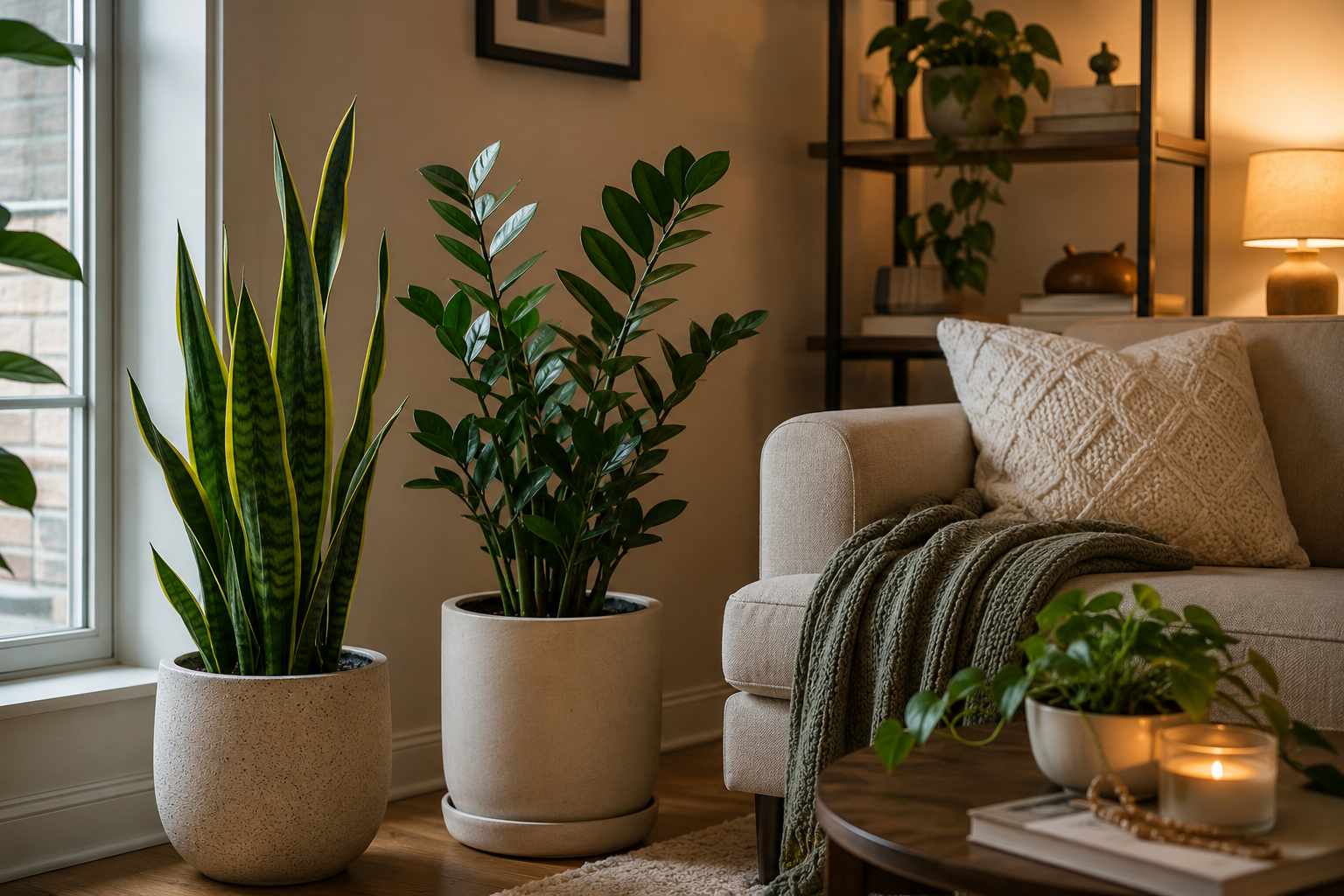
If you live in a north-facing apartment, basement unit, or building blocked by other structures, you already know the struggle.
Your space feels dim.
Sunlight barely reaches the corners.
And most plant guides tell you to “place in bright indirect light.”
But what if you don’t have bright indirect light?
This guide focuses only on truly low-light tolerant plants. Not “likes bright shade.” Not “prefers filtered sun.”
Real plants that tolerate darker U.S. apartments.
If you’re a renter, busy professional, or beginner plant owner — this is for you.
What “Low Light” Actually Means in an Apartment
Low light means:
• 3–6 feet away from a window
• North-facing exposure
• No direct sun beams
• Overcast or shaded buildings
• Winter light reduction
If your apartment gets no direct sunlight for most of the day — this list is built for you.
Quick Comparison Table (All 13 Plants)
| Plant | Light Tolerance | Maintenance Level | Pet Safe? | Avg Price |
|---|---|---|---|---|
| Snake Plant | Very Low | Very Easy | ❌ No | $15–$30 |
| ZZ Plant | Very Low | Very Easy | ❌ No | $18–$35 |
| Pothos | Low | Easy | ❌ No | $12–$25 |
| Cast Iron Plant | Very Low | Easy | ✔ Yes | $25–$45 |
| Chinese Evergreen | Low | Easy | ❌ No | $20–$40 |
| Peace Lily | Low | Moderate | ❌ No | $20–$40 |
| Parlor Palm | Low | Easy | ✔ Yes | $15–$35 |
| Dracaena | Low | Easy | ❌ No | $20–$50 |
| Aglaonema | Low | Easy | ❌ No | $20–$40 |
| Philodendron Heartleaf | Low | Easy | ❌ No | $12–$25 |
| Lucky Bamboo | Very Low | Easy | ✔ Yes | $10–$30 |
| Spider Plant | Low | Easy | ✔ Yes | $12–$25 |
| Calathea (Select Types) | Low | Moderate | ✔ Yes | $25–$45 |
Now let’s break them down properly.
1. Snake Plant (Sansevieria)
One of the most forgiving low-light plants in existence.
Light: Tolerates very dim rooms
Water: Every 2–3 weeks
Pet Safe: ❌ Toxic to cats/dogs
Why it works in dark apartments:
Snake plants tolerate inconsistent light and seasonal changes.
Common mistake:
Overwatering in winter.
If you’re unsure about watering frequency, follow this indoor plant watering schedule to prevent root rot.
Indoor-plant-watering-schedule
Affiliate placement suggestion:
• Moisture meter
• Minimalist ceramic planter
2. ZZ Plant
Nearly indestructible.
Light: Low to very low
Water: Every 2–3 weeks
Pet Safe: ❌ Toxic
Thrives in office-like lighting.
Ideal for:
• Bedrooms
• Hallways
• Windowless corners
3. Pothos (Golden or Jade)
Excellent trailing plant for renters.
Light: Low to moderate
Water: Weekly to biweekly
Pet Safe: ❌ Toxic
Perfect for:
• Shelf styling
• Hanging planters
• Small apartments
If you’re decorating vertically, these small space gardening ideas can help maximize shelf placement.
4. Cast Iron Plant (Pet Safe Winner)
Light: Very low
Water: Every 2–3 weeks
Pet Safe: ✔ Yes
One of the few genuinely low-light AND pet-safe plants.
Extremely resilient.
5. Chinese Evergreen
Light: Low
Water: Moderate
Pet Safe: ❌ Toxic
Handles dim apartments beautifully.
Low-maintenance and beginner-friendly.
6. Peace Lily
Light: Low
Water: Weekly
Pet Safe: ❌ Toxic
One of the few flowering plants that tolerates low light.
Note:
Will bloom less in darker rooms — but foliage remains attractive.
7. Parlor Palm (Pet Safe)
Light: Low
Water: Weekly
Pet Safe: ✔ Yes
Softens dark corners.
Ideal for bedrooms.
8. Dracaena
Light: Low
Water: Every 1–2 weeks
Pet Safe: ❌ Toxic
Tall varieties work well in living rooms.
Avoid placing directly near heating vents.
9. Aglaonema
Light: Low
Water: Moderate
Pet Safe: ❌ Toxic
Extremely tolerant of dim environments.
10. Heartleaf Philodendron
Light: Low
Water: Weekly
Pet Safe: ❌ Toxic
Low-maintenance trailing option.
11. Lucky Bamboo (Pet Safe Option)
Light: Very low
Water: In water or soil
Pet Safe: ✔ Yes
Great for bathrooms or desks.
12. Spider Plant (Pet Safe)
Light: Low to moderate
Water: Weekly
Pet Safe: ✔ Yes
One of the safest beginner options.
13. Calathea (Select Varieties)
Light: Low
Water: Consistent moisture
Pet Safe: ✔ Yes
More maintenance required — but safe for pets.
Best Tools for Dark Apartment Plant Care
Recommended Budget Tools
| Tool | Price Range | Why It Helps |
|---|---|---|
| Moisture Meter | $10–$20 | Prevents overwatering |
| Warm Grow Light (Optional) | $25–$60 | Winter support |
| Balanced Liquid Fertilizer | $10–$20 | Spring feeding |
| Humidifier | $30–$60 | Prevents brown tips |
If you’re new to feeding plants, review the best fertilizer for houseplants to understand nutrient balance.
best-fertilizer-for-houseplants
Seasonal Care for Low-Light Apartments
Winter:
• Reduce watering
• Stop fertilizing
• Monitor humidity
Spring:
• Resume feeding
• Rotate plants toward available light
Summer:
• Watch AC dryness
Fall:
• Begin reducing fertilizer
Understanding seasonal rhythms prevents plant instability.
FAQ Section
What plant survives in a room with no windows?
Snake plant and ZZ plant tolerate very low artificial light but still benefit from occasional indirect light exposure.
Are there plants that don’t need sunlight at all?
No plant survives without light. However, many tolerate low-light conditions for extended periods.
What is the easiest low-light plant for beginners?
Snake plant and ZZ plant are the most forgiving.
Are low-light plants good for bedrooms?
Yes. Parlor palms, snake plants, and spider plants work well in bedrooms.
Do I need a grow light?
Not always. But during winter in very dark apartments, supplemental lighting helps.
Which low-light plants are safe for cats?
Cast iron plant, spider plant, parlor palm, and lucky bamboo.
Why are my low-light plants turning yellow?
Most likely overwatering.
How often should I fertilize low-light plants?
Only during spring and summer, every 4–6 weeks.
Plant care varies depending on light exposure, climate zone, apartment layout, and individual plant conditions. Always monitor soil moisture and adjust watering or fertilizing based on your specific environment.
This post may contain affiliate links. If you purchase through these links, Urban Bloom Space may earn a small commission at no additional cost to you. We only recommend products that align with renter-friendly, practical plant care solutions.