
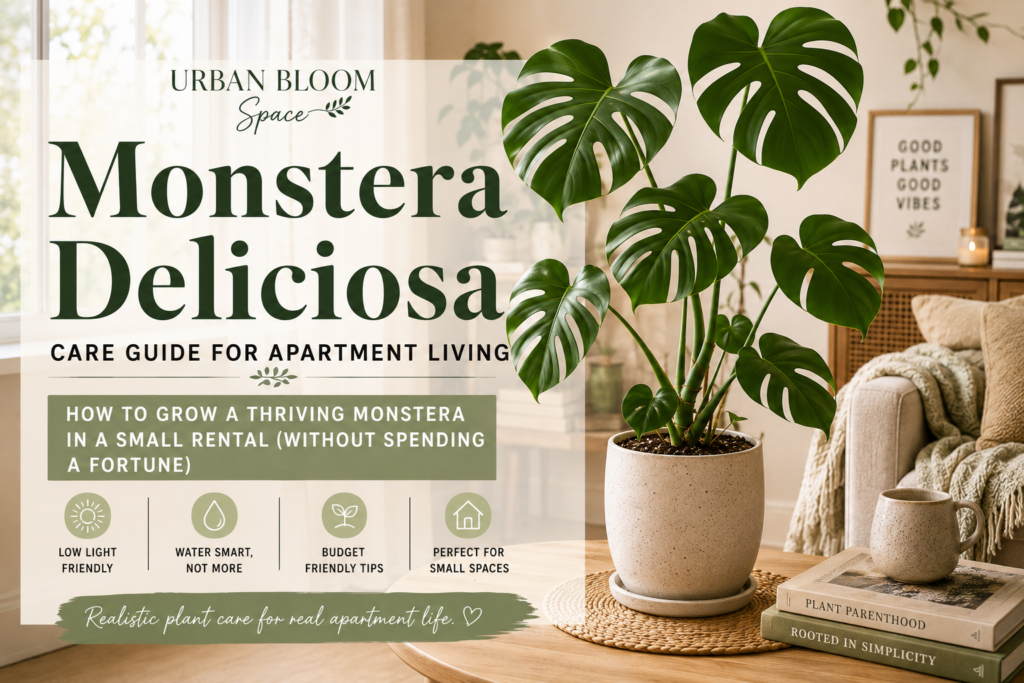
You noticed yellow leaves on your Monstera this morning. Don’t panic — yellowing is the most common Monstera problem in US apartments, and most of the time it’s completely fixable. Before you do anything drastic, take a breath. Your plant is not dead. It is sending you a message, and this guide will help you decode exactly what that message is.
In US apartments especially, Monsteras face a unique combination of stressors: dry heated air in winter, varying window light, chlorinated tap water, and pots that don’t drain well. Any one of these can trigger yellow leaves. All nine causes below are common in city apartments across New York, Chicago, Houston, Seattle, Los Angeles, and beyond.
By the end of this guide you will know exactly why your Monstera is turning yellow and have a clear, step-by-step fix you can start today.
Quick Diagnosis — Answer These 3 Questions First
Before reading all 9 causes, run through this fast checklist:
1. Have you watered your Monstera in the last 5 days? Yes = check Cause 1 (overwatering) first.
2. Is your apartment getting less than 2 hours of indirect light per day? Yes = check Cause 3 (too little light).
3. Did you recently move the plant, repot it, or change its location? Yes = check Cause 9 (natural stress/aging) first.
Still unsure? Read all 9 causes — the symptom descriptions will point you to the right one.
Cause 1: Overwatering
What it looks like
The leaves on the lower part of your Monstera turn uniformly yellow — sometimes soft or slightly mushy at the base. The soil feels wet or soggy even several days after watering. You might notice a slightly musty smell from the pot.
Why it happens in US apartments
Overwatering is the number one reason why people ask ‘why is my Monstera yellow’ in US apartments. It happens because most US apartment renters water on a fixed weekly schedule regardless of what the plant actually needs. In winter especially, when apartments are heated and windows are closed, Monsteras need far less water than in summer. Soil that stays wet too long deprives the roots of oxygen, causing root rot which shows up as yellowing leaves.
The fix
- Stop watering immediately. Let the soil dry out completely before watering again.
- Stick your finger 2 inches into the soil. Only water when it feels dry at that depth.
- Check the drainage hole at the bottom of the pot. If water is not flowing out freely, the soil or pot is causing waterlogging.
- If the yellowing is severe, remove the plant from the pot, inspect the roots, and trim any black or mushy roots with clean scissors.
- Going forward: water every 10-14 days in winter and every 7-10 days in summer as a starting guide, always checking the soil first.
Cause 2: Underwatering
What it looks like
Leaves turn yellow and also look slightly wilted or curled. The edges may feel crispy or papery to the touch. The soil is bone dry and pulling away from the edges of the pot. Yellowing usually appears on multiple leaves at once.
Why it happens in US apartments
While overwatering is more common, underwatering does happen — especially in summer when US apartments heat up quickly and soil dries out faster. Some renters are so afraid of overwatering that they swing too far in the other direction and leave their Monstera parched for two to three weeks.
The fix
- Water your Monstera deeply and thoroughly right now. Let water flow out of the drainage hole until it runs clear.
- If the soil is so dry it is repelling water, place the pot in a shallow tray of water for 30 minutes to let it soak from the bottom up.
- In summer (June to August) check soil moisture every 5-6 days rather than every 10.
- Yellow underwatered leaves will not turn green again, but new healthy growth will confirm the plant has recovered.
Cause 3: Too Much Direct Sun
What it looks like
Yellow patches appear on the areas of the leaf that face the window directly. The rest of the leaf may look fine. In some cases the patches look bleached or washed out rather than a pure yellow. This is more common on south-facing US apartment windows.
Why it happens in US apartments
In the US, south-facing apartment windows receive intense direct afternoon sun that can scorch Monstera leaves. Monsteras are tropical understory plants — in nature they grow under a canopy of taller trees and never receive direct harsh sunlight. A US apartment in June through August with a clear south-facing window can expose your plant to light far stronger than it is built for.
The fix
- Move your Monstera 3-5 feet back from the window so it receives bright indirect light rather than direct rays.
- Alternatively, hang a sheer curtain on the window to diffuse the direct sunlight.
- East-facing windows are ideal for Monsteras in US apartments — bright morning light, no harsh afternoon sun.
- The yellowed patches will not heal on existing leaves, but new leaves will grow in healthy once the light issue is corrected.
Cause 4: Low Humidity (US Winter Heating)
What it looks like
Leaves develop yellow tones combined with crispy brown tips or edges. This is particularly noticeable in the colder months. The yellowing often starts at the leaf edges and works inward. The rest of the plant looks structurally fine — not drooping, not mushy.
Why it happens in US apartments
This is one of the most common and overlooked reasons why Monsteras turn yellow specifically in US apartments. Central heating in American apartments drops indoor humidity to 20-30% in winter — sometimes lower. Monsteras come from humid tropical environments and prefer 50-60% humidity. When dry heated apartment air constantly pulls moisture from the leaves, the plant shows stress through yellowing and browning tips. If you live in cities like Chicago, Minneapolis, Denver, or New York where winters are long and heating is cranked up, this is a major factor to watch.
The fix
- Place a small humidifier near your Monstera. A budget option under $30 is sufficient and makes an immediate difference.
- If you do not want a humidifier, place the pot on a pebble tray filled with water. As the water evaporates it raises the humidity around the plant.
- Group your Monstera near other houseplants — plants naturally release moisture and create a more humid microclimate.
- Do not mist the leaves directly. It is largely ineffective and can encourage fungal issues.
- Keep your Monstera away from heating vents and radiators which dry the air aggressively.
Cause 5: Wrong Soil or Poor Drainage
What it looks like
Widespread yellowing that does not clearly match overwatering or underwatering patterns. The soil stays wet for a very long time after watering — five or more days. The pot may feel very heavy. Roots may appear compacted or sitting in wet dense soil when you check.
Why it happens in US apartments
Many US apartment plant owners buy their Monstera from a big-box store like Home Depot, Lowe’s, or Walmart and leave it in whatever soil it came in. Generic all-purpose potting mixes — including standard Miracle-Gro soil — are too dense and water-retentive for Monsteras. They hold moisture against the roots far too long. Without the right soil aeration and drainage, even correct watering habits lead to root stress and yellow leaves.
The fix
- Repot your Monstera into a well-draining chunky mix: combine regular potting soil with perlite (30%) and orchid bark (20%). All three are available at Home Depot or Lowe’s.
- Make sure your pot has at least one drainage hole. If it does not, repot into a pot that does.
- If repotting feels daunting right now, at minimum add perlite to the top inch of soil to help with surface drainage.
- After repotting, wait one week before watering to let the roots settle.
Cause 6: Rootbound Plant
What it looks like
Your Monstera has been in the same pot for two or more years. Despite doing everything right with watering and light, leaves are still turning yellow. You may notice roots growing out of the drainage hole or circling visibly at the surface of the soil.
Why it happens in US apartments
A rootbound Monstera has outgrown its pot. The roots have consumed all available soil space and can no longer absorb nutrients and water efficiently. This is especially common with Monsteras purchased from US stores that are already pot-bound. The restricted root system causes overall stress that shows up as yellowing leaves.
The fix
- Check if roots are coming out of the drainage hole or wrapping around the surface — these are clear signs it is time to repot.
- Choose a new pot that is 2 inches wider than the current one. Do not go too large — an oversized pot holds too much water.
- Spring (March through May) is the best time to repot in the US, when the plant is entering its active growing season.
- Terracotta pots are recommended for US apartments because they breathe and help prevent overwatering.
Cause 7: Tap Water Chemicals
What it looks like
Yellowing and browning appears specifically at the very tips and edges of the leaves rather than spreading across the whole leaf. The rest of the plant looks reasonably healthy. This is a slow, gradual yellowing that develops over weeks rather than appearing suddenly.
Why it happens in US apartments
US municipal tap water contains chlorine and fluoride, and in some cities it is also hard water with high mineral content. While these levels are safe for humans, sensitive tropical plants like Monsteras can react to long-term mineral and chemical buildup in the soil. This is why people who water consistently and correctly still end up asking why is my Monstera yellow at the tips.
The fix
- Switch to filtered water using a basic Brita pitcher. This removes chlorine and reduces mineral content.
- Alternatively, fill a jug of tap water and let it sit uncovered overnight. The chlorine dissipates naturally within 24 hours.
- If you have very hard water, occasional use of distilled water will help flush mineral buildup.
- Every 3-4 months, flush the soil thoroughly by watering several times in a row to wash out accumulated mineral salts.
Cause 8: Nutrient Deficiency
What it looks like
New leaves emerge looking pale, lime-green, or yellowy rather than the deep glossy green you expect. Older leaves remain relatively green while younger growth looks washed out. The plant is otherwise growing actively.
Why it happens in US apartments
Monsteras in pots consume the available nutrients in their soil over time. Most potting soils are depleted of nutrients within 6-12 months of repotting. US apartment Monsteras that have not been fertilized in over a year are likely running low on nitrogen, which is responsible for the deep green color of healthy leaves. This is a common and easy fix that most beginners overlook.
The fix
- Feed your Monstera with a balanced liquid fertilizer (20-20-20 NPK ratio) diluted to half strength. Brands like Jack’s Classic, Miracle-Gro Liquid, or Espoma Grow are widely available on Amazon and at US garden centers.
- Fertilize once a month during spring and summer (April through September). Do not fertilize in fall or winter — the plant is resting and cannot process nutrients effectively.
- Never fertilize a dry plant. Water first, then fertilize 30 minutes later to avoid fertilizer burn on roots.
- Yellow leaves caused by deficiency will not turn green, but new growth will emerge healthy and dark.
Cause 9: Natural Aging
What it looks like
One or two leaves at the very bottom of the plant turn yellow and eventually die off. The rest of the plant looks completely healthy, is growing new leaves, and shows no other symptoms. This yellowing affects only the oldest, lowest leaves.
Why it happens in US apartments
This is the one cause that requires no intervention at all — it is completely normal. Like any living plant, your Monstera sheds its oldest leaves as it puts energy into new growth. Many US plant owners panic when they see any yellow leaf, but if it is just one or two at the base of the plant and everything else looks great, you are watching natural leaf turnover, not a problem.
The fix
- Do nothing, unless the yellowing is spreading to mid or upper leaves.
- Once the yellow leaf has died off completely, remove it cleanly at the base of the stem using clean scissors.
- If you are seeing more than 2-3 bottom leaves yellow at the same time, double-check the other 8 causes — that is beyond normal aging.
How to Prevent Yellow Leaves Going Forward
Now that you have diagnosed and fixed the issue, here is the simple routine that keeps most US apartment Monsteras healthy year-round:
- Water only when the top 2 inches of soil are dry — not on a fixed schedule
- In winter, run a small humidifier near your Monstera when the heating is on
- Use filtered or overnight tap water if you are in a US city with hard or heavily chlorinated water
- Fertilize monthly from April through September with a diluted balanced liquid fertilizer
- Repot every 1-2 years in spring into fresh chunky, well-draining soil
- Place in bright indirect light — east-facing windows are ideal in most US apartments
- Check your plant weekly for early warning signs so small issues do not become big problems
Quick Reference: All 9 Causes at a Glance
Use this table to quickly match what you are seeing on your plant to the most likely cause and fix.
| Cause | Symptom | Quick Fix |
| 1. Overwatering | Yellow + mushy, lower leaves first | Let dry out; check drainage |
| 2. Underwatering | Yellow + crispy edges, drooping | Water thoroughly; set schedule |
| 3. Too much direct sun | Yellow patches, bleached look | Move back from south window |
| 4. Low humidity | Yellow + brown crispy tips | Humidifier or pebble tray |
| 5. Wrong soil / drainage | Widespread yellowing, wet soil | Repot with chunky airy mix |
| 6. Rootbound | Yellowing despite good care | Repot 2 inches larger |
| 7. Tap water chemicals | Yellow tips, edge browning | Use filtered or overnight water |
| 8. Nutrient deficiency | Pale/lime yellow new leaves | Balanced liquid fertilizer |
| 9. Natural aging | 1-2 oldest bottom leaves only | Remove leaf, no action needed |
Want a Printable Plant Diagnosis Cheat Sheet?
If you want a quick single-page reference you can print and keep near your plants, the Urban Bloom Space
Plant Rescue Guide PDF covers diagnosis checklists for the most common US apartment plant problems
including overwatering, root rot, pests, and nutrient issues — all in one printable guide.
Find it in the shop at: urbanbloomspace.com/shop
Also check out the Indoor Plant Care Guide for Beginners if you are just getting started
and want a complete care system for all your apartment plants, not just your Monstera.
FAQ
Will yellow Monstera leaves turn green again?
Unfortunately, no. Once a leaf has turned yellow it will not revert to green. However, once you fix the underlying cause, all new leaves that your Monstera produces will be healthy and green. The existing yellow leaf can be removed cleanly once it has fully died back.
How many yellow leaves is too many?
One or two yellow leaves at the base of the plant is normal aging. If you are seeing three or more leaves yellowing at the same time, or yellowing on mid to upper leaves, that indicates one of the 9 causes above and needs attention. Act on it quickly — the sooner you diagnose the cause, the faster your plant recovers.
My Monstera has yellow leaves AND brown spots — what does that mean?
Yellow leaves with brown crispy edges usually point to low humidity or tap water chemicals (Causes 4 and 7). Yellow leaves with dark brown soft spots often indicate overwatering or root rot (Cause 1). Yellow leaves with dry brown tips are usually a humidity or underwatering issue. Use the combination of symptoms to narrow it down, or run through the 3-question diagnosis box at the top of this post.
You’ve Got This
Yellow leaves are not a verdict on your plant parenting skills. They are information. Every single cause on this list is fixable — some in under five minutes. The fact that you are here, reading this, means you care enough to figure it out. That alone puts your Monstera in good hands.
Bookmark this guide and come back whenever something looks off. And if you found it helpful, the Plant Rescue Guide PDF in the Urban Bloom Space shop gives you a printable one-page diagnosis sheet you can stick on your fridge for quick reference all year long.
Recommended Yoast SEO settings: focus keyword = monstera turning yellow