
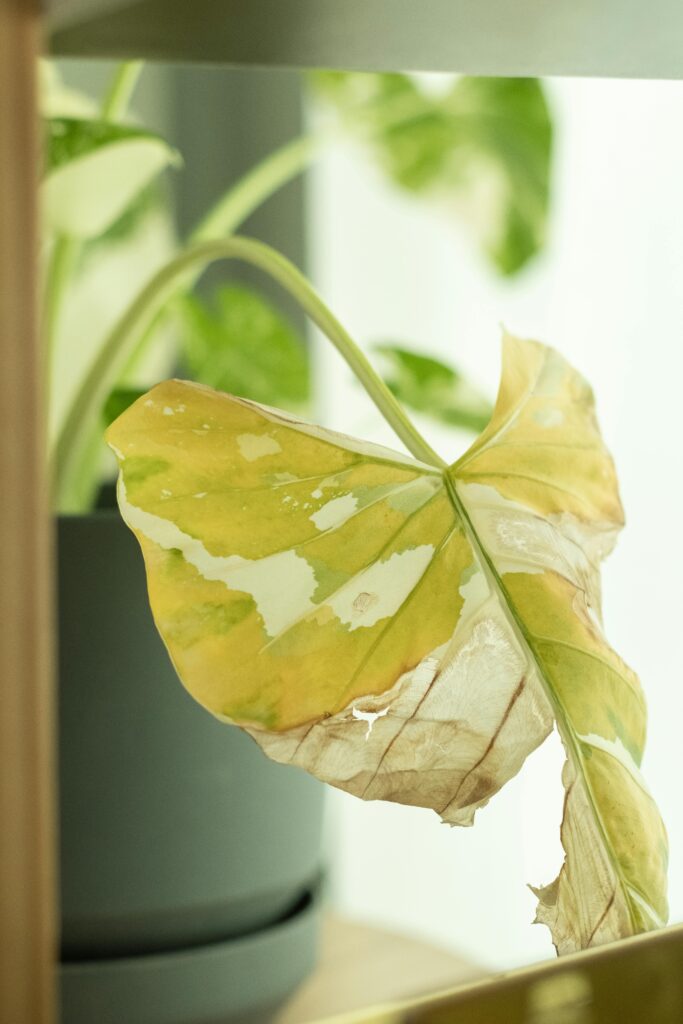
Yellow leaves are one of the most common problems indoor plant lovers encounter. Whether it’s a Money Plant, Peace Lily, Snake Plant, ZZ Plant, or Alocasia, seeing those fresh green leaves turning yellow can be worrying. But the good news is—most causes are fixable.
Indoor plants communicate through their leaves, and yellowing is their way of saying “Something is wrong.” In this detailed guide from Urban Bloom Space, you will learn the exact reasons why indoor plant leaves turn yellow and how to fix each problem step-by-step.
Let’s break it down completely.
🌱 1. Overwatering: The No.1 Reason Behind Yellow Leaves
Overwatering is the biggest cause of yellowing leaves in indoor plants.
✔ How to Identify:
- Leaves turn soft and yellow
- Soil smells bad
- Mold or fungus on soil
- Lower leaves fall off
- Pot feels heavy all the time
✔ Why It Happens:
Too much water suffocates the roots, causing root rot, which leads to yellow leaves.
✔ Solution:
- Let the soil dry 60–70% before watering again.
- Improve drainage using perlite, pumice, or sand.
- Always empty the tray after watering.
- If rot is severe, repot in fresh soil.
🌿 2. Underwatering: Dry Soil Also Causes Yellow Leaves
Not giving enough water can also turn leaves yellow.
✔ Signs:
- Leaves look crispy and yellow
- Soil separates from pot edges
- Light-weight pot
- Brown leaf tips
✔ Fix:
- Give a slow, deep watering until water drains out.
- Use a watering schedule (every 7–10 days depending on plant type).
- Mulch the top layer with coco chips to retain moisture.
☀️ 3. Too Much or Too Little Light
Light plays a huge role in leaf health.
✔ Yellow Leaves from Low Light:
- Leaves fade
- Stretched stems
- Plant leans toward light source
✔ Yellow Leaves from Excess Light:
- Scorch marks
- Brown-yellow tips
- Sunburn patches
✔ Fix:
- Place plants in bright, indirect sunlight.
- Use sheer curtains to filter harsh rays.
- Rotate plant every 10 days for balanced growth.
- For low-light rooms, use grow lights.
🌡 4. Temperature Stress (AC/Heater Exposure)
Indoor plants hate sudden temperature changes.
✔ Why Leaves Turn Yellow:
- Air conditioners dry out leaves
- Heaters burn moisture
- Cold drafts weaken roots
✔ Ideal Temperature:
18°C to 28°C for most indoor plants.
✔ Fix:
- Keep plants away from AC vents, heaters, balconies during winter nights, and direct cold air.
💧 5. Wrong Water Quality (Hard Water Issues)
Many homes use hard tap water filled with salts and chlorine.
✔ Signs:
- Yellow edges
- White residue on soil
- Brown spots on leaves
✔ Fix:
- Use filtered, RO, or rainwater.
- Allow tap water to sit 24 hours before use.
🌿 6. Nutrient Deficiency
If the plant doesn’t get proper nutrients, leaves fade and turn yellow.
✔ Common Deficiencies:
- Nitrogen deficiency → pale yellow leaves
- Magnesium deficiency → yellow leaves with green veins
- Iron deficiency → new leaves turn yellow
✔ Fix:
- Use liquid fertilizers like seaweed, NPK 19-19-19, or micronutrient mix.
- Feed monthly during the growing season (March–September).
🪴 7. Poor Soil Mix or Compacted Soil
Wrong soil suffocates roots and prevents oxygen flow.
✔ Signs:
- Slow growth
- Yellowing lower leaves
- Hard, compact soil
- Water sitting on top of soil
✔ Fix:
Repot in a loose, airy mix:
- 40% cocopeat
- 30% compost
- 20% perlite
- 10% garden soil
This promotes better drainage and root health.
🐜 8. Pest Infestation (Silent Yellowing)
Pests suck plant sap and cause yellow leaves.
✔ Common Indoor Plant Pests:
- Mealybugs
- Spider Mites
- Aphids
- Thrips
✔ Symptoms:
- Sticky leaves
- White cotton-like spots
- Tiny webs
- Yellow speckles
✔ Fix:
- Wipe leaves with Neem oil spray.
- Spray soap water (2 drops mild soap per liter).
- Isolate infected plants.
- Repeat for 7–10 days.
🌱 9. Natural Leaf Aging (Not a Problem)
Sometimes yellowing is completely normal.
Plants shed old leaves to save energy.
✔ Signs:
- Only lower leaves turn yellow
- New leaves look healthy
- No pests or watering issues
✔ Fix:
Just prune the old leaves—this is the plant’s natural life cycle.
🌿 10. Incorrect Pot Size (Rootbound or Too Large)
✔ Rootbound Plants (Pot too small):
- Leaves turn yellow
- Roots growing out of drainage holes
✔ Pot Too Large:
- Soil stays wet → root rot → yellow leaves
✔ Fix:
- Choose a pot 2 inches bigger than current size.
- Ensure drainage holes are present.
🌧 11. Humidity Problems
Indoor plants—especially tropical ones—need humidity to stay green.
✔ Low Humidity Signs:
- Yellow edges
- Brown crispy tips
- Drooping leaves
✔ Fix:
- Group plants together
- Use a pebble tray
- Mist lightly (not too much)
- Use a humidifier in winter
🪴 12. Overfertilization (Fertilizer Burn)
More fertilizer does NOT mean faster growth.
✔ Symptoms:
- Yellow edges
- Brown burnt spots
- White crust on soil
- Droopy leaves
✔ Fix:
- Flush soil with clean water
- Stop feeding for 30–40 days
- Use mild fertilizers only
🌱 Quick Diagnostic Table
| Symptom | Cause | Solution |
|---|---|---|
| Yellow soft leaves | Overwatering | Dry soil + repot |
| Crispy yellow leaves | Underwatering | Deep watering |
| Yellow with brown tips | Low humidity | Mist + humidifier |
| Yellow spots | Pests | Neem oil |
| Pale yellow leaves | Low light | More indirect light |
| Yellow leaves with green veins | Nutrient deficiency | Micronutrient mix |
| Yellow + mushy roots | Root rot | Trim roots + fresh soil |
| Yellow on old leaves only | Natural aging | Prune |
🌼 Conclusion
Yellow leaves may seem like a plant disaster, but they’re actually a helpful signal. Once you identify the cause—whether it’s watering, light, pests, or soil—you can bring your indoor plant back to full health. Always observe your plant weekly and correct problems early.
For more indoor plant tips, visit UrbanBloomSpace.com, your friendly guide to home gardening and plant care.
⚠️ Disclaimer
This article is for educational purposes only. Plant behavior varies depending on environment, humidity, soil type, and light conditions. UrbanBloomSpace.com is not responsible for any adverse effects caused by improper care, chemicals, or misdiagnosis. Always test treatments on a small area before applying.