
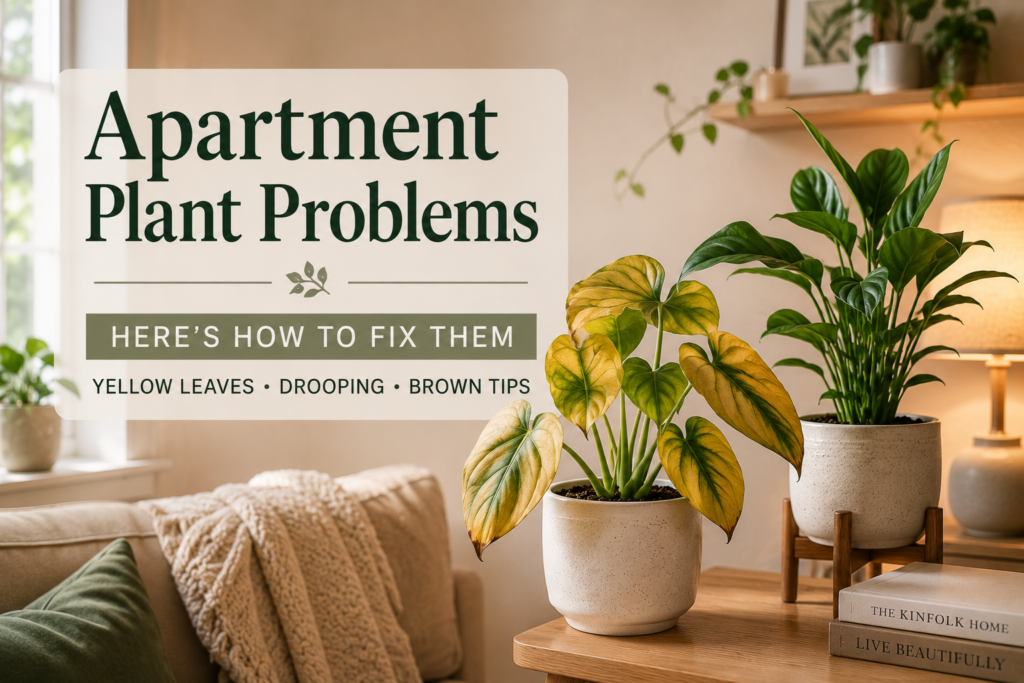
The Moment You Notice Something’s Wrong
You bought a beautiful plant. You watered it on schedule. You even found it a spot near the window that seemed bright enough.
And then, a few weeks in, you noticed it: a leaf turning yellow at the edges. Then another. Then a third one, drooping slightly, like it was giving up.
If you live in an apartment, this scene is almost a rite of passage. Dry indoor heating, a window that faces the wrong direction, watering habits borrowed from a friend’s sunroom setup that never quite matches your own space — it all adds up. One day your plant corner feels calm and intentional, and the next it feels like a slow-motion apology you can’t quite figure out how to make.
If you’ve already typed “why are my indoor plant leaves turning yellow” into a search bar at 11pm, you’re in good company. Before you spiral into panic-repotting, know this: yellow leaves are rarely a death sentence. They’re a message. And once you know how to read it, the fix is usually simpler than it feels right now.
Discovering What Was Actually Going Wrong
Like most apartment plant owners, my first instinct was to blame the plant. Wrong soil. Wrong pot. Maybe even a bad batch from the nursery.
But after digging into the actual causes — and comparing notes with other renters dealing with the exact same north-facing windows and radiator-dry air — a pattern emerged. It wasn’t the plant. It was a mismatch between the plant’s needs and the apartment’s environment, plus a handful of habits most of us pick up without realizing they’re a problem.
That’s also around the time I went back and reread our guide on choosing the right beginner plants for apartment conditions — because the real fix wasn’t a single trick. It was understanding which plants are naturally forgiving of apartment quirks, and which ones need conditions most rentals simply can’t offer without a little extra effort.
The Four Culprits Behind Yellow Leaves (and What Each One Looks Like)
Once you know what to look for, diagnosing yellow leaves gets a lot less stressful. Almost every apartment case comes down to one of four things:
Overwatering — the most common cause by far. Watering on a fixed schedule instead of checking the soil first leads to yellowing that starts at the bottom of the plant, mushy stems, soil that never quite dries out, and sometimes a faint sour smell. The fix is almost embarrassingly simple: let the soil dry before you water again.
Poor drainage — decorative pots without drainage holes are everywhere in apartment decor, and they’re a quiet killer. Water pools at the bottom, roots sit in it, and eventually they suffocate. Swap in a pot with real drainage, or slip a nursery pot with holes inside the decorative one.
Low light — most apartments simply don’t get bright, direct light, and plants placed too far from a window will respond with pale color, dropping leaves, and weak, leggy stems. Moving the plant closer to the window, switching to sheer curtains, or adding a small grow light usually solves it within a couple of weeks.
Sudden environmental changes — plants dislike abrupt shifts far more than people expect. Cold drafts, AC vents, radiators, and even moving a plant to a new spot in the room can trigger yellowing as a stress response. Keep plants a reasonable distance from vents, heaters, and exterior doors.
| Symptom | Likely Cause | Fix |
|---|---|---|
| Bottom leaves yellow, soil wet | Overwatering | Let soil dry out fully |
| Leaves pale and soft | Low light | Move closer to a window |
| Yellow with brown edges | Low humidity | Increase moisture around the plant |
| Yellowing right after repotting | Transplant shock | Give it time — don’t overcorrect |
| Spotty, uneven yellow patches | Pests | Check the undersides of leaves |
The Reset: How I Actually Fixed It
The process itself turned out to be far less dramatic than the anxiety leading up to it.
Step 1: Remove any leaves that are already fully yellow — they won’t turn green again, and holding onto them just pulls energy from the healthy parts of the plant. Step 2: Check the soil moisture before doing anything else. Don’t guess — actually stick a finger in an inch deep. Step 3: Adjust watering based on what you find, not based on the calendar. Step 4: Improve light exposure if the plant’s been sitting in a dim corner. Step 5: Wait about two weeks before making any further changes. Plants respond slowly, and reacting too fast — repotting again, moving it a third time, adding fertilizer “just in case” — tends to cause more damage than the original problem.
If you’re dealing with something more delicate, like an Alocasia or a Calathea, the same reset applies, just with more attention to humidity. Statement plants in that category — including patterned varieties like caladiums — need a slightly more deliberate setup, and our caladium care guide for apartments walks through exactly how to keep their color vivid without a greenhouse.
Why This Actually Solves the Problem (Not Just Patches It)
Here’s the part that made the biggest difference for me: once I stopped watering on a fixed schedule and started actually checking the soil, the yellowing didn’t just stop — it stopped coming back. That’s the real win. A one-time fix gets you through this week. Understanding why it happened protects every plant you bring home after this one.
This matters especially in apartments, where the environment doesn’t change much room to room. If one plant is struggling because of low light near an interior wall, every other plant in that same spot will eventually run into the same issue unless you adjust either the plant or the placement.
Where Else This Applies
This reset isn’t just for the plant currently stressing you out. The same diagnostic habits apply anywhere in your apartment:
- Bedrooms with limited morning light, where pothos and snake plants tend to hide yellowing longer before it’s obvious
- Bathrooms with humidity swings, where ferns and calatheas are especially sensitive to inconsistent watering
- Living room corners away from windows, where a plant might look fine for months before slowly declining
- Kitchen shelves near ovens or radiators, where heat exposure mimics the same stress signs as underwatering
Once you’ve got the habit of checking soil and light before reacting, it applies to pretty much anything green you bring into the apartment.
How It Feels Once You’ve Got It Figured Out
There’s a particular kind of relief in watching a plant recover instead of decline. The first new leaf that comes in solid green — no yellow edge, no drooping — feels disproportionately satisfying, especially after a few weeks of wondering if you’d made a mistake.
More than that, though, it changes how the whole space feels. A plant corner that used to make you anxious every time you walked past it becomes something calming again. That shift — from dread to a small, quiet kind of pride — is honestly a bigger payoff than the plant itself.
Ready to Build On This?
If you’ve just gotten your first plant back to full health, that confidence is worth building on. Once the basics feel manageable, it’s a natural next step to explore something a little more expressive for your space — and our roundup of 10 rare indoor plants you can grow in apartments is a good place to start, with beginner-friendly picks that won’t undo everything you just learned.
Yellow leaves aren’t the end of the story. They’re usually just the beginning of understanding your space a little better — and every plant you bring home after this one will be easier for it.