
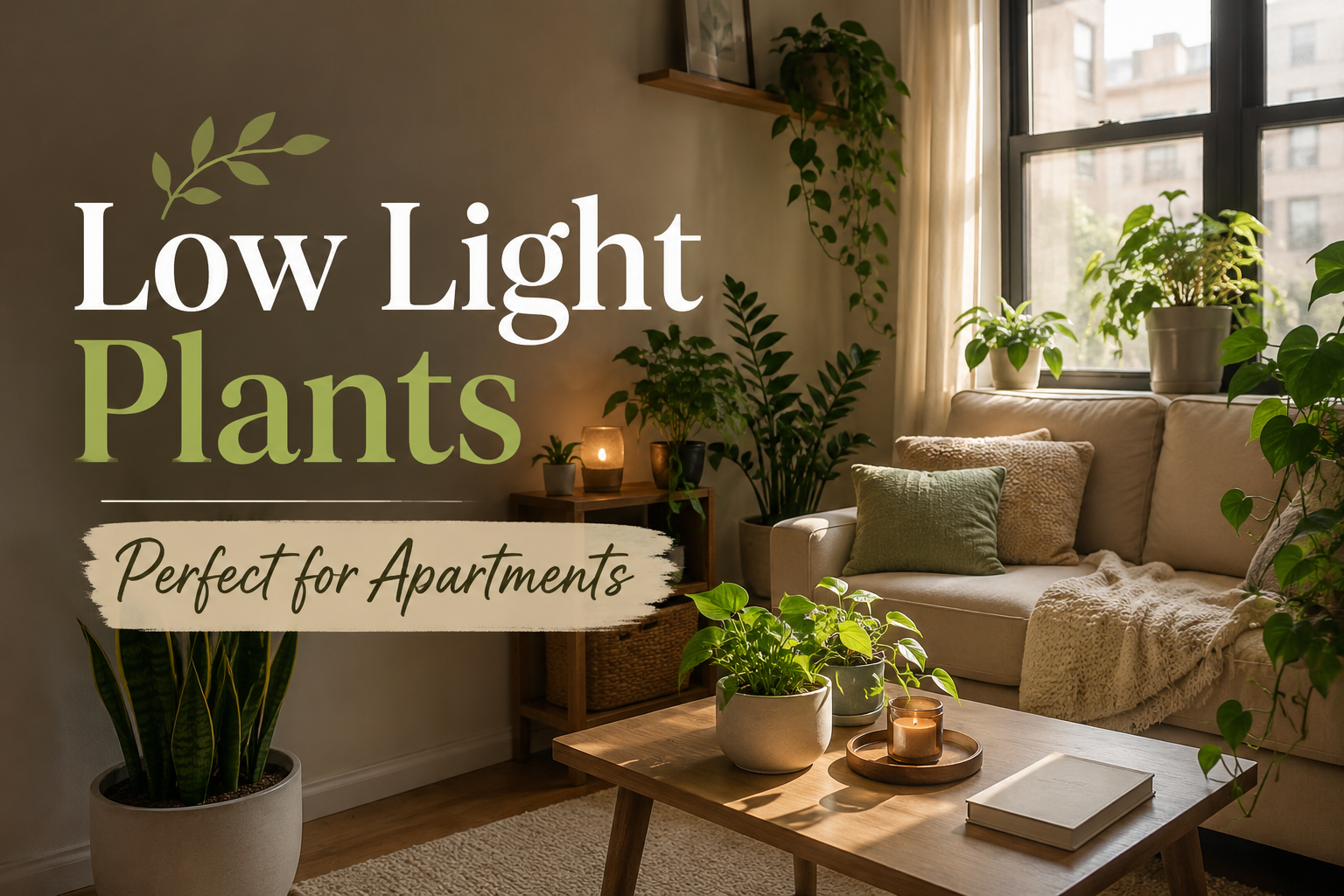
15 Best Indoor Plants for Apartments (Low Light + Easy for Beginners)
The Moment You Realize Plant Shopping Isn’t as Simple as It Looks
You walk into a plant shop — or scroll through one online — ready to finally green up your apartment. And within about five minutes, you’re overwhelmed.
Maybe your windows face another building. Maybe your living room barely sees two hours of soft daylight. Maybe you’ve already brought home a plant or two that quietly gave up on you within a month, and you’re starting to wonder if you’re just “bad at plants.”
You’re not. Most of that early frustration comes down to one simple mismatch: buying a plant based on how it looks in the store, not on whether it can actually survive your specific apartment. The good news is there’s a whole category of houseplants that were basically built for exactly your situation — low light, inconsistent attention, small footprints — and once you know which ones they are, apartment plant shopping stops feeling like a gamble.
Finding the List That Actually Works for Apartments
After killing my fair share of plants that “just needed more light” (translation: needed a completely different apartment), I started doing this differently. Instead of buying whatever looked good under the store’s grow lights, I began researching which plants were specifically bred and selected — over generations — to tolerate low light, irregular watering, and compact spaces.
That research eventually led me to a much deeper resource on this exact topic: our full breakdown of low-light plants that genuinely thrive in shade, which goes further into the shade-specific varieties beyond the core 15 below. But for a solid starting shortlist — the plants I’d actually recommend to someone building their very first apartment plant collection — this is the list I kept coming back to.
The 15 Plants (and Why Each One Earns Its Spot)
Before going plant by plant, here’s the quick-reference version:
| Plant | Light Needs | Watering | Difficulty | Pet Safe |
|---|---|---|---|---|
| Snake Plant | Low to medium | Every 2–3 weeks | Very Easy | No |
| Pothos | Low to bright indirect | Weekly | Easy | No |
| ZZ Plant | Low light | Every 2–3 weeks | Very Easy | No |
| Spider Plant | Bright indirect | Weekly | Easy | Yes |
| Parlor Palm | Low to medium | Weekly | Easy | Yes |
| Cast Iron Plant | Low light | Every 2–3 weeks | Very Easy | Yes |
Now, the details on each:
1. Snake Plant (Sansevieria) — One of the easiest apartment plants there is. It thrives in low light, tolerates missed watering, and its tall, upright shape works beautifully in small corners. Water only when the soil is completely dry, usually every 2–3 weeks. Great for bedrooms, entryways, and dim apartments.
2. Pothos (Devil’s Ivy) — A true beginner favorite. It grows in low light, its trailing vines look effortlessly good on shelves, and it’s easy to propagate if you want to expand your collection for free. Water weekly or whenever the soil feels dry.
3. ZZ Plant — Built for people who forget to water. Extremely drought tolerant, thrives in low light, and its glossy leaves add a modern touch to any room. Water every 2–3 weeks and otherwise leave it alone.
4. Monstera Deliciosa — The statement plant of the group. It needs bright indirect light and more consistent watering than the others, but its bold, split leaves bring serious tropical character to a living room.
5. Spider Plant — One of the best pet-safe options on this list. Non-toxic to cats and dogs, easy to grow, and it produces baby offshoots you can pot separately. Needs bright indirect light.
6. Peace Lily — A flowering plant that tolerates low light and, conveniently, tells you when it’s thirsty by drooping slightly. Water about once a week. Adds a soft, elegant touch to bathrooms and bedrooms.
7. Rubber Plant — Modern and sculptural, needing medium to bright indirect light. A good choice if you want a design-forward statement piece for a living room corner.
8. Philodendron — Forgiving and low-maintenance, growing well in medium light. A reliable pick for shelves and smaller apartments.
9. Cast Iron Plant — Genuinely lives up to its name. Extremely tough, slow-growing, and happy in low light — ideal for the darkest corner of your apartment.
10. Chinese Evergreen — Tolerates low light while still offering colorful, patterned leaves. Water when the soil feels dry.
11. Aloe Vera — Best suited to sunnier apartments. Needs bright light and minimal watering, with the bonus of mild medicinal uses. Great for a kitchen windowsill.
12. Parlor Palm — Pet-safe, apartment-friendly, and happy in low to medium light. Adds soft, airy texture without much fuss.
13. Dracaena — A low-maintenance, vertical option that works well in small spaces and awkward corners.
14. Boston Fern — Lush and soft, but needier than the rest of this list — it wants bright indirect light and consistent watering. Best for humid spots like bathrooms.
15. Fiddle Leaf Fig — The most advanced plant here. It needs bright indirect light and steady watering, and it’s not the most forgiving choice for a first-time plant owner — but in a spacious, well-lit living room, it’s hard to beat visually.
Setting Up for Success (Without Overthinking It)
None of this requires special equipment. Start by matching light before anything else — check whether your space is genuinely low light, medium light, or bright indirect light before you buy, rather than after. From there, use pots with drainage holes, check soil moisture with a finger before watering (not a calendar), and resist the urge to fertilize heavily in the first few months. New plants need time to settle into a space before they’re ready for extra nutrients.
If you’re not sure where to place a new plant, err on the side of more light rather than less — most of the plants on this list handle a little too much better than they handle almost none.
How This Solves the Actual Problem
This is the part that matters most: choosing plants suited to your apartment — not the plants that happened to look nice at the store — is what actually breaks the cycle of buying, killing, and feeling discouraged. Once you match the plant to the light you actually have, care stops feeling like guesswork.
That’s especially true if your apartment leans toward the darker end of the spectrum. If most of your rooms get very little direct light, it’s worth spending a little extra time on our dedicated guide to the best indoor plants for apartments with low light — it narrows this list down even further to the plants that handle genuinely dim conditions without complaint.
Where These Plants Fit Best
A few ways to apply this list beyond just “buy one and see”:
- Bedrooms — Snake plants and peace lilies add a calming presence without demanding bright light.
- Living rooms — Monstera, rubber plants, or a fiddle leaf fig (if you have the light) make a strong visual statement.
- Kitchens and windowsills — Aloe vera and pothos both do well here, especially with a bit of filtered sun.
- Bathrooms — Boston ferns and peace lilies appreciate the extra humidity.
- Home offices — Parlor palms and ZZ plants add life to a workspace without needing daily attention.
If your apartment is on the darker side even by these standards — think interior rooms with no direct window access at all — our roundup of low-light plants for dark apartments with no direct sunlight goes even further into the handful of plants that can handle truly minimal light.
Why It’s Worth Getting Right
There’s a specific kind of satisfaction in walking past a plant corner that’s actually thriving instead of quietly declining. It’s a small thing, but it adds up — a shelf of healthy pothos, a snake plant that’s clearly been in the same spot for months without complaint. It makes the whole apartment feel more lived-in and less like a space you’re just passing through.
Start Small, Then Build From Here
If you’re feeling overwhelmed by the full list, don’t try to build the whole collection at once. Start with three: a snake plant, a pothos, and a ZZ plant. All three are close to impossible to kill, and mastering them first will make everything after that feel far less intimidating.
Small, well-matched choices are what actually turn a bare apartment into a calm, green one — no huge windows or gardening background required.