
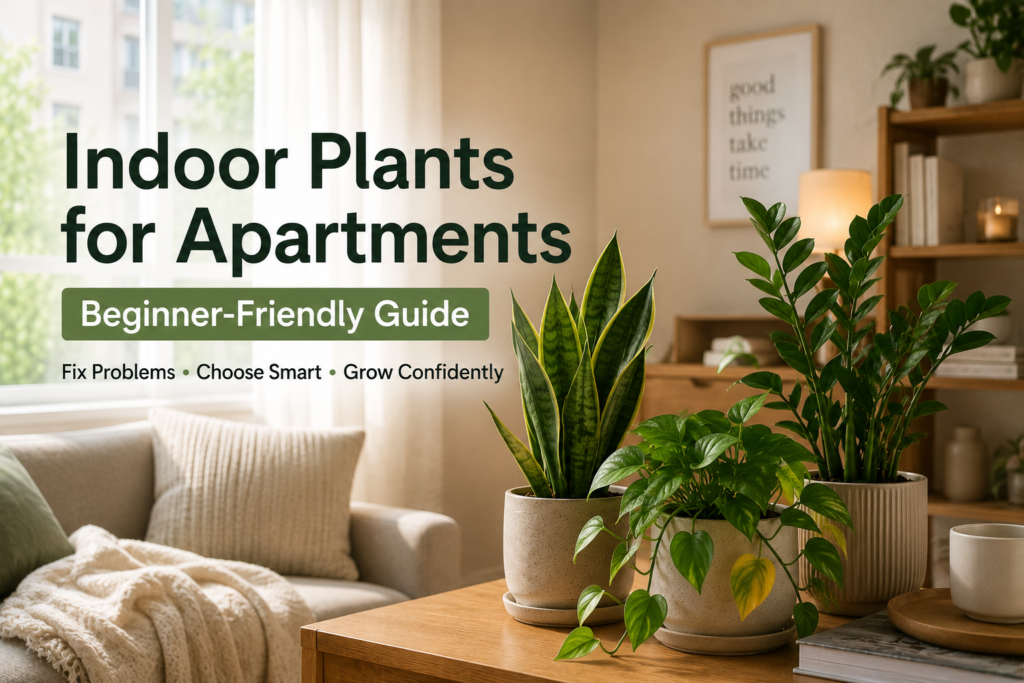
Indoor Plants for Apartments: A Beginner-Friendly Care Guide
You bought a plant because you wanted your apartment to feel a little more alive. A little more calm. A little more “put together.”
Instead, you’re staring at yellow leaves. Drooping stems. Crispy brown tips. And you’re asking yourself the same question every new plant parent eventually asks:
“Why is this so hard?”
Here’s the truth: apartment plant care is genuinely different from the plant care advice you’ll find scattered across the internet. Most of that advice assumes you live in a sunlit house with oversized windows and a mudroom for good measure. Your reality looks different — north-facing windows, dry heating vents, air conditioning, and a living room that gets maybe two hours of decent light a day.
If your leaves have already started turning yellow, you’re not alone, and it’s rarely too late to fix. Our complete guide to why indoor plants get yellow leaves in apartments walks through the most common causes room by room — but stick with this guide first, because the fix usually starts with matching the right plant to your actual space, not just treating the symptom.
This guide will help you choose the right indoor plants for your apartment, sidestep the mistakes almost every beginner makes, and build a small plant corner that actually survives — and maybe even thrives.
Why Indoor Plants Struggle in Apartments
Before you buy another plant, it helps to understand the environment you’re actually working with.
Most apartments share the same quiet challenges:
- North-facing or shaded windows
- Limited direct sunlight
- Dry winter heating
- AC airflow in summer
- Reduced overall air circulation
Stack these together and you get a low-grade, constant source of plant stress — the kind that doesn’t kill a plant outright, but slowly wears it down until one day the leaves just give up.
Understanding your environment is step one. Choosing the right plant for that environment is step two.
Choosing the Right Indoor Plants for Apartments
Here’s the part nobody tells you at the garden center: not every trending plant belongs in a small apartment.
Some of the most Instagrammable plants demand:
- High humidity
- Bright, tropical-strength sunlight
- Near-constant attention
If you’re new to plant care, or simply too busy to babysit a diva plant, start with something more forgiving.
Best Low-Maintenance Indoor Plants for Apartments
| Plant | Light Needs | Watering | Care Level | Why It’s Apartment-Friendly |
|---|---|---|---|---|
| Snake Plant | Low–Medium | Every 2–3 weeks | Very Easy | Handles low light & dry air |
| ZZ Plant | Low | Every 2–3 weeks | Very Easy | Drought tolerant |
| Pothos | Low–Bright Indirect | Weekly | Easy | Forgiving & adaptable |
| Cast Iron Plant | Low | Every 2–3 weeks | Very Easy | Extremely resilient |
| Philodendron | Medium | Weekly | Easy | Stylish but manageable |
Starting simple isn’t a compromise — it’s a strategy. A plant that survives your first three months builds the confidence (and the routine) you’ll need before adding anything fussier to the mix.
Want More Color? Try a Statement Plant Like Caladium
Once you’ve got the basics down, it’s natural to want something with a little more personality — bold color, dramatic leaves, something that makes guests ask “wait, what plant is that?”
Caladiums are one of the easiest ways to get that effect without sacrificing your apartment’s limited light and humidity budget. If bright, patterned foliage is calling your name, our Caladium plant care guide for apartments breaks down exactly how to keep the leaves vivid and healthy indoors, even without a greenhouse setup.
Most Common Indoor Plant Problems in Apartments
This is where most of the frustration lives. Let’s identify the symptoms quickly so you can stop guessing.
Yellow Leaves Usually caused by overwatering, low light, or poor drainage. Check the soil before you reach for the watering can — this single habit prevents most yellow-leaf cases.
Brown Leaf Tips Usually caused by dry indoor air, winter heating, or salt buildup. A small humidifier or a pebble tray can make a noticeable difference.
Drooping Plants Usually caused by inconsistent watering or sudden temperature swings. Check the soil before watering again — drooping doesn’t always mean thirsty.
Mold on Soil or Fungus Gnats Usually caused by constantly wet soil or poor airflow. Let the soil dry out fully between waterings.
Indoor Plants by Apartment Lighting Type
Understanding your light is the single biggest predictor of plant success.
Low-Light Apartments Best plants: Snake Plant, ZZ Plant, Cast Iron Plant, Chinese Evergreen Avoid: Fiddle Leaf Fig, most Alocasia varieties, Calathea in dark corners
Bright Indirect Light Apartments Best plants: Monstera, Philodendron, Alocasia, Begonia Placement tip: keep these within 3–5 feet of a window for the light they actually need.
A Simple Indoor Plant Care System for Busy Schedules
Random care creates random results. A light system removes the guesswork.
| Task | Frequency |
|---|---|
| Check soil moisture | Weekly |
| Rotate plant | Monthly |
| Wipe leaves | Monthly |
| Check for pests | Every 2 weeks |
| Fertilize (spring/summer) | Every 4–6 weeks |
Consistency — not perfection — is what keeps plants (and plant owners) calm.
Indoor Plants That Elevate Your Apartment’s Aesthetic
Plants don’t just survive in your space — done right, they style it.
- Cozy living rooms → Monstera or Philodendron
- Bedroom calm corner → Snake Plant
- Small shelves → Pothos or Hoya
- Bathroom → Fern (if bright enough)
Beginner Mistakes Apartment Owners Make
- Watering on a fixed schedule instead of checking the soil
- Buying plants based on looks alone
- Using decorative pots with no drainage
- Ignoring which direction your windows face
- Overcrowding small spaces
Apartment plant care isn’t about getting everything perfect. It’s about small, consistent adjustments.
Ready to Go Rare? Proceed with Confidence, Not Guesswork
Once you’ve got a few low-maintenance plants thriving, it’s tempting to chase something rarer — an Alocasia, a Pink Princess, a Silver Dragon. There’s nothing wrong with that instinct. Rare doesn’t have to mean risky, as long as you go in informed rather than impulsive.
If you’re ready for that next step, our roundup of 10 rare indoor plants you can grow in apartments is built specifically for beginners — no greenhouse or years of experience required, just the right plant matched to the right corner of your apartment.
If You’re Feeling Overwhelmed
Start with one plant. A Snake Plant or a ZZ Plant. Master that one relationship before adding another.
Confidence in plant care is built through small wins, not a Pinterest board full of ambition.
Final Thoughts
Indoor plants absolutely can thrive in apartments. Success just depends on three things: matching the plant to your light, watering with intention instead of habit, and understanding the quirks of your specific space.
At UrbanBloomSpace, we believe apartment plant care should feel calming, not stressful.
Start simple. Observe closely. Grow intentionally.